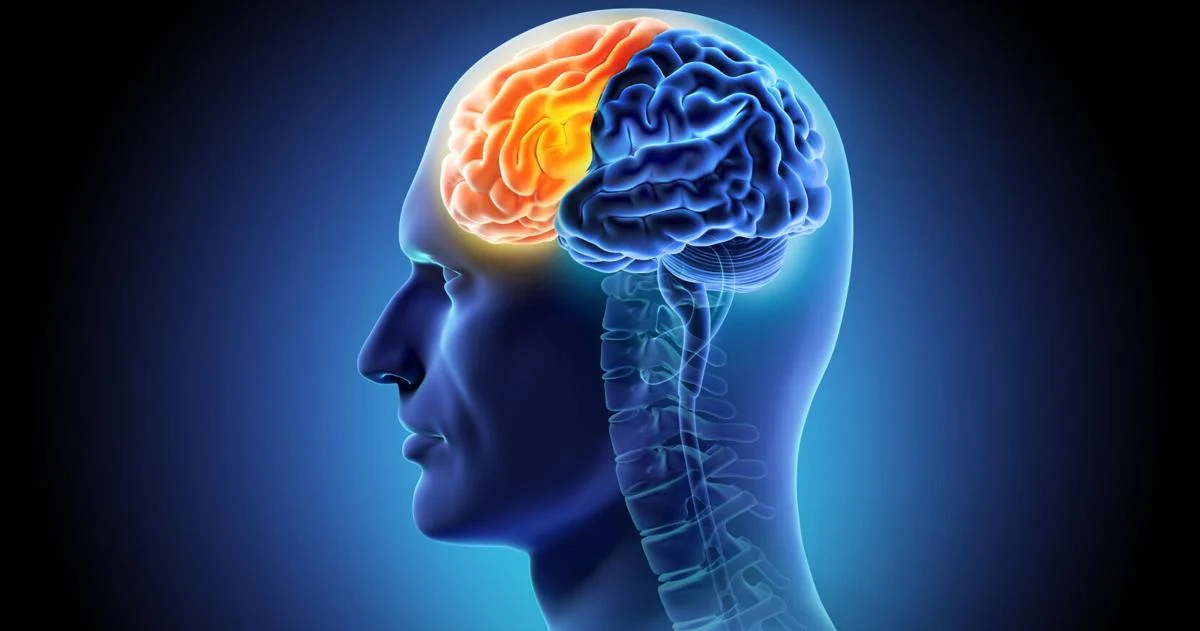
Scientists in China have uncovered a genetic mechanism that may help explain how the intricate folds of the human brain evolved, challenging the traditional view that the expansion of the primate brain was driven primarily by newly evolved genes.
The findings, published in Nature Genetics, highlight the role of an ancient gene called CCNB1IP1 in the development of cortical folds, the wrinkles and grooves that characterise the human cerebral cortex and are associated with advanced cognitive abilities.
The research was led by Shi Lei of the Kunming Institute of Zoology, part of the Chinese Academy of Sciences. The team investigated how changes in gene regulation during evolution may have contributed to the development of the complex structure of the human brain.
Ancient gene linked to brain folding
The human cerebral cortex contains an intricate network of folds that increases its surface area and provides space for more neural tissue within the skull.
These folds are an important feature of the human brain, although scientists have long sought to understand precisely how they developed during evolution.
The traditional explanation has emphasised the role of newly evolved genes in the expansion of the primate cerebral cortex. However, the Chinese research team proposed that ancient genes may also have contributed to this process through changes in how strongly they are expressed.
Their findings suggest that the evolutionary importance of a gene may depend not only on when it first appeared, but also on how its activity changed over time.
Researchers compare five species
To investigate the gene’s role, the scientists analysed gene-expression data from different layers of the embryonic cerebral cortex in five species: mice, tree shrews, marmosets, macaques and humans.
The comparison revealed that CCNB1IP1 was already active in the brain of the tree shrew, a small mammal related to primates, well before the emergence of modern primates.
However, its expression level in tree shrews was relatively low.
The researchers found a gradual increase in the gene’s expression across the species examined, with levels rising from tree shrews and marmosets to macaques and reaching their highest point in humans.
The pattern suggested a relationship between the gene’s activity and the degree of folding in the cerebral cortex.
According to Shi, marmosets, which have relatively smooth brains, displayed gene-expression levels similar to those observed in tree shrews. Macaques, whose cerebral cortex has more pronounced folds, showed substantially higher expression, while humans exhibited the highest levels.
Scientists Discover Surprising Link Between Gut Bacteria and Brain Function
Regulatory sequence helps explain the change
The research team also identified a regulatory DNA sequence known as CRE1 that drives increased expression of CCNB1IP1.
Regulatory elements influence when, where and how strongly genes are activated. Changes in these sequences can therefore alter biological development without requiring an entirely new gene to evolve.
The identification of CRE1 provides a possible explanation for how an ancient gene could acquire a more prominent role in brain development during evolution.
Rather than the gene itself being newly created, changes in its regulation may have increased its activity and contributed to differences in the structure of the cerebral cortex.
Mouse experiment reveals effects on brain development
To investigate the gene’s function, the researchers introduced it into a mouse model.
Mice normally have a relatively smooth cerebral cortex, unlike the extensively folded cortex found in humans.
According to the study summary, mice carrying the introduced gene developed cortical folding structures. The modified animals also performed better in learning and memory tests.
These results provide experimental evidence supporting a role for CCNB1IP1 in cortical development and cognitive performance in the model used.
However, findings from genetically modified mice do not establish that the gene alone explains the evolution of the human brain. Human cognition and brain structure are complex traits shaped by many genes, developmental processes and environmental influences.
Findings could help research into neurological disorders
The study offers a different perspective on how the human brain acquired its distinctive structure.
It suggests that evolutionary changes in gene regulation, rather than the emergence of new genes alone, may have helped shape the cerebral cortex.
The findings could also provide new avenues for investigating neurological and neurodevelopmental disorders associated with abnormal brain development.
Further research will be needed to establish how CCNB1IP1 interacts with other genetic and developmental factors and how closely the mechanisms observed in animal models reflect those operating in the developing human brain.
Nevertheless, the discovery highlights the importance of ancient genes and their regulatory sequences in understanding the evolution of the brain and the biological processes underlying human cognition.