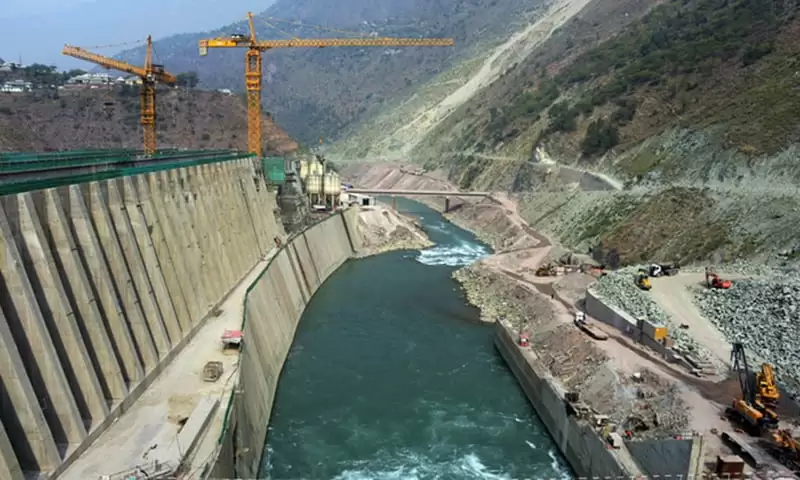
ISLAMABAD: The estimated cost of Pakistan’s under-construction Mohmand Dam has surged by 115% over eight years, reaching Rs666 billion, according to federal government officials and project documents.
The revised estimate was presented to the Central Development Working Party (CDWP) this week. However, the forum deferred a decision because of a lack of time, officials said.
The CDWP is the first stage in the approval process for major development projects, which are subsequently referred to the Executive Committee of the National Economic Council (ECNEC) for final approval.
The Water and Power Development Authority (Wapda), which is executing the project, has proposed increasing the cost by Rs356 billion from the original estimate of Rs310 billion approved in April 2018.
The project was initially scheduled for completion by September 2025. However, exchange-rate fluctuations, design changes, the 2022 floods and security-related challenges have contributed to delays and increased costs, according to the explanation submitted by project management to the Planning Commission.
Rupee Depreciation Accounts for 51% of Cost Increase
Wapda has informed the Planning Commission that approximately 51% of the proposed cost escalation is attributable to changes in the dollar-rupee exchange rate, according to officials familiar with the assessment.
The project includes both local and foreign currency components. As the rupee depreciated, the local-currency cost of foreign payments increased, adding to the overall financial burden.
Planning Commission officials held detailed discussions on the impact of exchange-rate fluctuations and asked Wapda to provide information about dollar-denominated contractual payments and the extent to which currency variations could legitimately be reflected in the revised project cost.
Officials also stressed that foreign currency components should not automatically be converted at the latest exchange rate without examining the relevant contractual terms and actual payment obligations.
The assessment is particularly significant because Pakistan’s reliance on imported equipment, foreign contractors and external resources can expose major infrastructure projects to currency-related cost increases.
Planning Commission Calls for Independent Audit
The Planning Commission has raised concerns about delays and cost escalation in the Mohmand Dam project, describing it as an example of the challenges affecting major Wapda-led development schemes.
It has recommended third-party validation to examine financial and physical resource utilisation, the scope of work, variation orders, escalation costs, the project timeline and financial arrangements.
The proposed review would also examine financial closure and other matters relevant to the project’s implementation.
The Planning Commission has further recommended updating the revised financial plan to clarify funding arrangements, including the federal government’s contribution through the Public Sector Development Programme (PSDP), any provincial share and loans from foreign lenders.
These reviews are intended to establish a clearer picture of the reasons behind the higher cost and ensure that the revised estimate is supported by appropriate documentation.
Met Office Forecasts Extended Spell of Rain and Thundershowers Across Upper, Central Pakistan
Project Spending Reaches Rs275 Billion
According to project documents, approximately 57% of the physical work had been completed by September 2026, with Rs275 billion already spent on the scheme.
The original project received ECNEC approval in April 2018 at a cost of Rs310 billion, including a rupee component of Rs71.5 billion.
Under the latest assessment, the estimated cost of the dam component has increased to Rs267 billion, up Rs153 billion, or 134%, from the earlier estimate.
The power generation component has risen to Rs399 billion, an increase of Rs204 billion, or 105%.
The revised estimates reflect the financial pressures facing the project, although the proposed overall increase has yet to receive final approval.
Flood Damage and Design Changes Delayed Construction
The project management has cited several factors behind the delay, including currency depreciation, changes in design, higher construction costs, the devastating floods of 2022 and security challenges.
Heavy flooding in the Swat River in 2022 damaged diversion tunnels at the project site, forcing construction work to stop for a significant period.
The dam is being constructed by a joint venture comprising China’s China Gezhouba Group Company Limited and Pakistan’s Descon Engineering Limited.
Despite the setbacks, the project remains a major part of Pakistan’s efforts to expand water storage, improve electricity generation and strengthen resilience against climate-related disasters.
Mohmand Dam Expected to Boost Water and Power Supplies
Once completed, the Mohmand Dam project is expected to increase Pakistan’s water storage capacity by 1.29 million acre-feet and contribute approximately 2.9 billion units of electricity to the national grid.
It is also designed to provide 300 million gallons of drinking water annually to Peshawar.
The project is considered strategically important because Pakistan faces persistent water-storage shortages, growing energy demands and increasing exposure to extreme weather events.
Its completion is expected to support water management, electricity generation and the supply of drinking water in the surrounding region.
Final Approval Awaits Further Review
The CDWP’s decision to defer consideration means the proposed Rs666 billion cost has not yet received final approval.
Before the revised estimate proceeds through the approval process, the Planning Commission has called for closer scrutiny of contractual obligations, funding arrangements, cost variations and project implementation.
The outcome of that review will help determine the final approved cost and the financial requirements for completing the dam.
The project highlights the challenges Pakistan faces in delivering large infrastructure schemes on time and within budget, particularly when currency depreciation, natural disasters and implementation delays combine to increase costs.