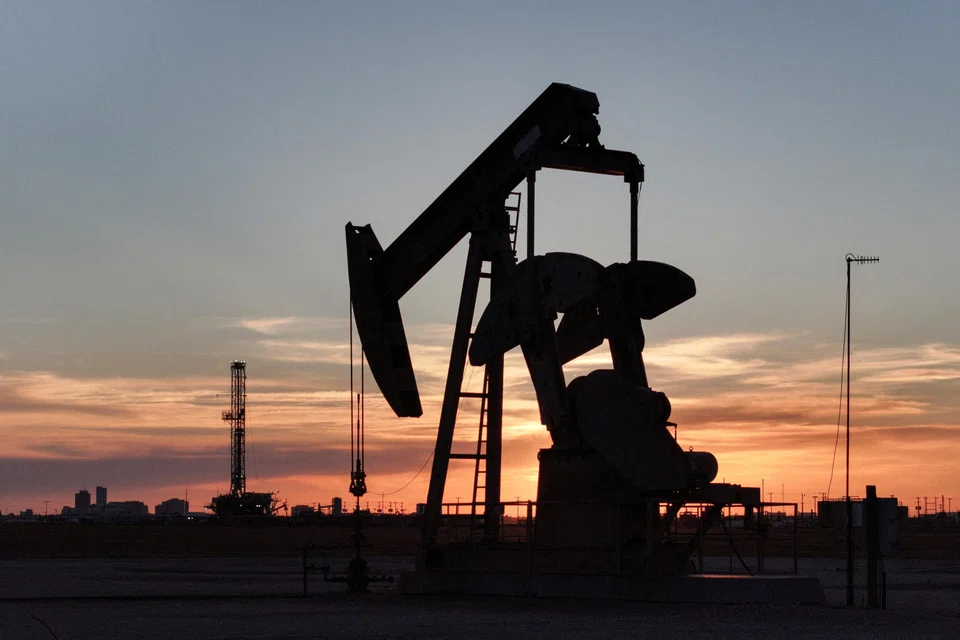
Brent crude futures fell 80 cents, or 0.85 per cent, to $93.82 per barrel as of 0426 GMT. US West Texas Intermediate (WTI) crude futures dropped $1.20, or 1.36 per cent, to $86.92 per barrel.
Both benchmarks had already fallen by more than 8 per cent in the previous session, settling at their lowest levels since August 31.
Midterm Election Results Raise Hopes for De-escalation
The latest decline reflects growing expectations that the election results could make it more difficult for Trump to pursue further military action against Iran.
Two sources close to Gulf government circles said on Wednesday that a weakened Trump, facing a Democratic-controlled Congress capable of constraining his military options, might have a stronger incentive to seek a diplomatic agreement.
They added that the possibility of a full-scale assault on Iran appeared less likely.
Sparta Commodities senior oil analyst June Goh said markets were assessing how the midterm election results could influence Trump’s next steps in the conflict.
Investors, she said, were increasingly pricing in the possibility of an end to the war.
However, Goh cautioned that significant uncertainty remained, with the path towards a diplomatic settlement still unclear and global strategic oil reserves already substantially depleted.
Oil Supply Through Strait of Hormuz Recovers
A possible resolution to the conflict could help restore oil supplies from the Middle East that were disrupted during the war.
Analysts said crude shipments through the Strait of Hormuz, a vital shipping route for Gulf oil exports, had recovered to levels close to those recorded before the conflict, although transportation costs remained higher.
According to a JPMorgan report issued on Wednesday, the recovery in Gulf oil supplies had pushed the global market back into surplus after months of disruption.
The bank estimated that the oil market returned to a surplus of 1.1 million barrels per day in September. The surplus increased to 1.4 million barrels per day in October, approaching last year’s average of 1.3 million barrels per day.
Oil Prices Rise as Iran War Uncertainty Weighs on Markets After US Election
Uncertainty Remains Over US Policy Towards Iran
Despite the recent decline in oil prices, analysts warned that the situation could remain volatile until the new Democratic-controlled Congress takes office in January.
Citi said in a report on Thursday that concerns remained over the possibility that the White House could turn its attention towards executive powers in foreign policy following the midterm elections, potentially increasing pressure on Iran.
Meanwhile, Eurasia Group revised its assessment of possible outcomes in the conflict. It lowered the estimated probability of renewed US strikes on Iran from 65 per cent to 60 per cent.
However, the group also reduced the likelihood of a diplomatic agreement from 20 per cent to 10 per cent, citing Iran’s firm position on its demands and the possibility that Trump would reject terms viewed as a defeat.
The probability of a prolonged standoff was raised from 15 per cent to 30 per cent.
Oil Could Surge to $125 if Conflict Escalates
Eurasia Group warned that any renewed escalation could trigger a sharp recovery in oil prices, potentially pushing Brent crude into a range of $110 to $125 per barrel.
Mukesh Sahdev, chief executive of energy consultancy XAnalysts, also highlighted the risks facing the market. He said commercial oil inventories in major consuming countries were close to their lowest levels in 15 years.
He added that Iran could emerge from the US election outcome with greater determination to maintain its position.
Meanwhile, US crude oil, gasoline and distillate inventories all declined last week, according to the Energy Information Administration. The agency also reported that US fuel demand had reached its highest level in a year.
The latest figures suggest that although expectations of reduced geopolitical tensions have eased pressure on oil prices, limited inventories and uncertainty over the conflict could leave global energy markets vulnerable to further price swings.