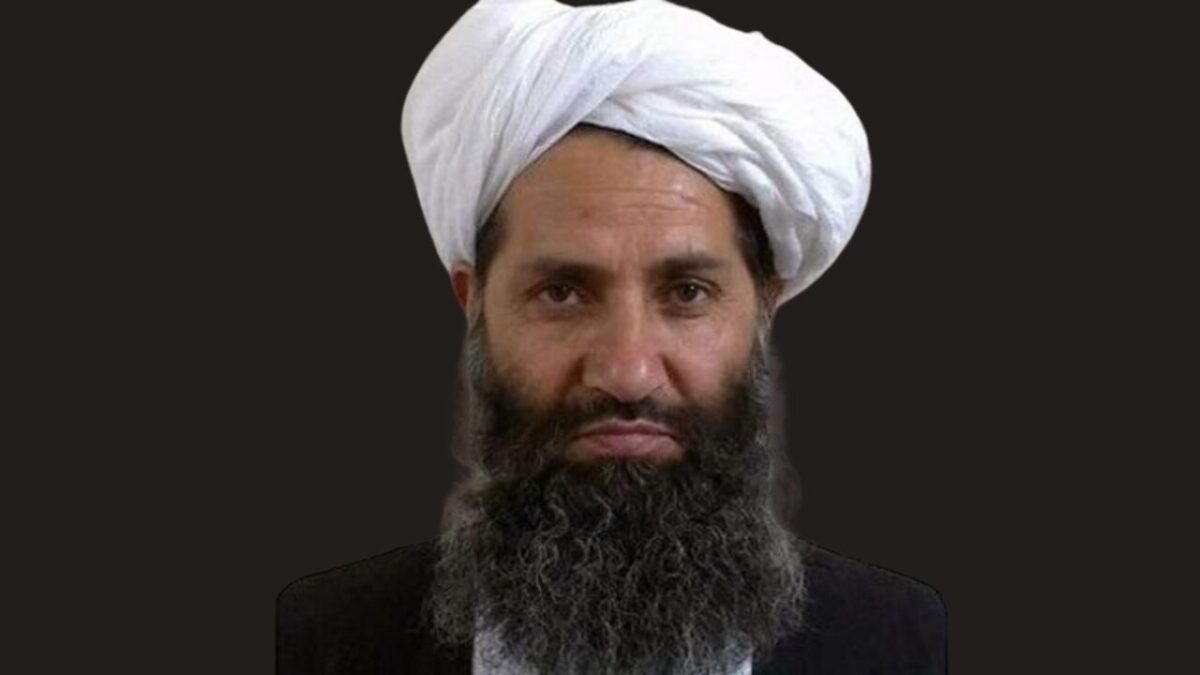
A book authored by Afghan Taliban supreme leader Mullah Hibatullah Akhundzada has brought renewed attention to the apparent contradictions between the group’s religious principles and its approach towards the Tehreek-e-Taliban Pakistan (TTP), whose continued attacks target Pakistan’s state institutions, security forces and civilians.
In his analysis, researcher Azhar Zeeshan examines the central arguments of Hibatullah’s book, Da Ahl al-Sunnah wal-Jama’ah Aqeedah, particularly its emphasis on obedience to the Emir, the prohibition of rebellion and the importance of Muslim unity.
The author argues that these religious principles raise serious questions about the Afghan Taliban leadership’s relationship with the TTP and its response to the group’s armed campaign against Pakistan.
Afghan Taliban and TTP
The Afghan Taliban leadership has repeatedly denied having organisational or operational control over the TTP, describing the Pakistani militant group as an independent entity.
However, assessments by international organisations, including the United Nations, and independent researchers have documented close ideological, historical and operational connections between the two movements.
A United Nations Security Council report released in February 2026 stated that the TTP was operating from Afghanistan with significant support from the Taliban administration in Kabul.
The 37th report of the UN Security Council’s Analytical Support and Sanctions Monitoring Team also said Afghanistan’s de facto authorities continued to provide a “permissive environment” for several armed groups, particularly the TTP.
Research by Abdul Sayed and Tore Hamming has further highlighted the relationship between the organisations.
According to their study, the TTP was among the first militant groups to celebrate the Afghan Taliban’s return to power in August 2021. In a statement issued on August 17, 2021, the TTP described the Taliban’s takeover of Kabul as a major victory for the global jihadist movement.
More significantly, TTP chief Mufti Noor Wali Mehsud publicly renewed his group’s pledge of allegiance to Hibatullah Akhundzada and reaffirmed its unconditional support for the Afghan Taliban leadership.
These developments, the author argues, make it difficult to describe the TTP and Afghan Taliban as entirely unrelated organisations. They also raise questions about the religious responsibilities of a leadership whose supreme authority is publicly recognised by the Pakistani militant group.
Obedience to the Emir
One of the central themes of Hibatullah’s book is the religious obligation to obey the Emir.
On pages 132 and 133, the Afghan Taliban leader discusses the importance of obedience to the ruler, drawing upon Islamic traditions and their interpretations to support his position.
The book presents obedience to the Emir as a religious duty and argues that disagreement with a ruler’s conduct or an individual decision does not automatically justify disobedience or withdrawal of allegiance.
According to Zeeshan, this interpretation raises difficult questions about the Afghan Taliban’s position on the TTP’s armed campaign against Pakistan.
If the Afghan Taliban considers obedience to a ruler a religious obligation, does it regard the TTP’s armed struggle against the Pakistani state as justified under its interpretation of Shariah?
Rubio Says US Willing to Help Address Pakistan’s Concerns Over Afghan-Based Terrorism
If the answer is yes, what religious or jurisprudential reasoning allows the group to reconcile that position with the principle of obedience emphasised by its own supreme leader?
On the other hand, if the Afghan Taliban does not consider the TTP’s campaign religiously justified, why has its leadership refrained from openly condemning the group or taking decisive steps to prevent it from using Afghan territory for activities against Pakistan?
The author argues that these questions expose a gap between the Afghan Taliban’s stated religious principles and their practical application.
The Question of Muslim Unity
Another important theme in Hibatullah’s book is the preservation of Muslim unity and the avoidance of internal divisions.
To support this argument, he refers to verse 103 of Surah Aal-e-Imran, which instructs Muslims to hold firmly together to the rope of Allah and not become divided.
Through this and other religious references, Hibatullah emphasises collective cohesion, religious solidarity and the prohibition of discord and sectarian division.
However, Zeeshan argues that this principle also requires examination in the context of the TTP’s continued violence against Pakistan.
He questions whether the Afghan Taliban’s concept of Muslim unity includes ordinary Pakistani citizens, members of the armed forces, police personnel and state institutions, or whether it is primarily applied to groups that share its ideological and political outlook.
The author also raises questions about whether the Afghan Taliban explicitly rejects religious arguments used to justify attacks against fellow Muslims.
If the leadership considers such violence contrary to Islamic principles, it must explain what practical and verifiable steps it has taken to prevent the TTP from using Afghan territory to plan, facilitate or carry out attacks against Pakistan.
Doctrine Versus Practice
The analysis ultimately challenges the Afghan Taliban leadership to explain whether the religious principles outlined in Hibatullah’s book represent binding obligations or are applied selectively according to political interests.
Zeeshan argues that religious principles cannot be invoked selectively and that ideological connections cannot take precedence over religious responsibilities.
The central question, therefore, is not simply what Hibatullah Akhundzada has written about obedience, allegiance and Muslim unity, but whether his leadership is prepared to apply those principles consistently when dealing with the TTP.
The author’s argument places the Afghan Taliban’s position on the Pakistani militant group under scrutiny, highlighting the need to reconcile its religious doctrine with its conduct and responsibilities towards neighbouring Pakistan.
Azhar Zeeshan is a researcher at the Centre for Aerospace and Security Studies (CASS), Lahore.