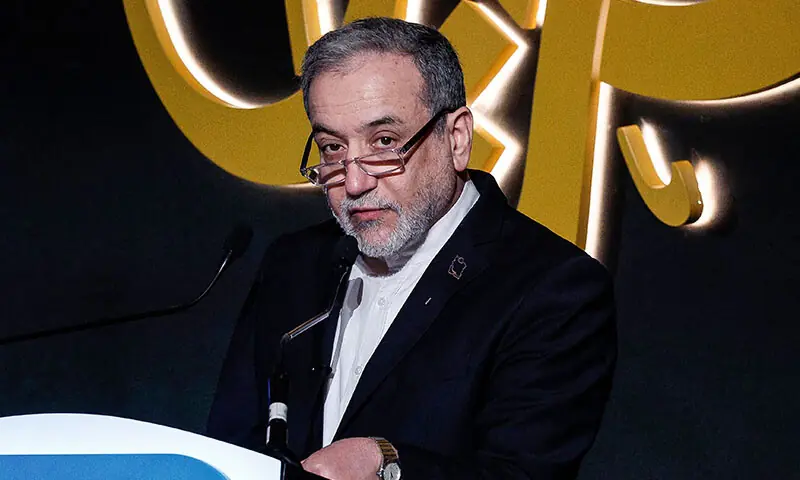
Iranian Foreign Minister Abbas Araghchi has accused Israel of repeatedly drawing the United States into prolonged conflicts, saying Americans and people across West Asia have grown tired of what he described as a cycle of “forever wars.” Meanwhile, diplomatic efforts to end the conflict face significant hurdles, with Washington and Tehran still far apart on key issues.
Iranian Foreign Minister Abbas Araghchi said on Monday that both Americans and people across the region were increasingly frustrated with Israel’s role in influencing US foreign policy and military decisions.
In a post on X, Araghchi responded to an interview in which US President Donald Trump defended his decision to launch military action against Iran.
Araghchi said Trump appeared to recognise that most Americans were “disgusted with Israel” but seemed confused about the reasons behind their feelings.
“Americans are evidently sick and tired of Israel bamboozling US administrations into Forever Wars. They had enough. So has our region,” the Iranian foreign minister wrote.
During the interview with CBS News’ 60 Minutes, Trump said he would make the same decision to attack Iran again, despite acknowledging the political costs of the conflict. He also claimed that the United States had won the war and that Tehran was interested in reaching an agreement.
Qeshm Attack Causes No Major Damage
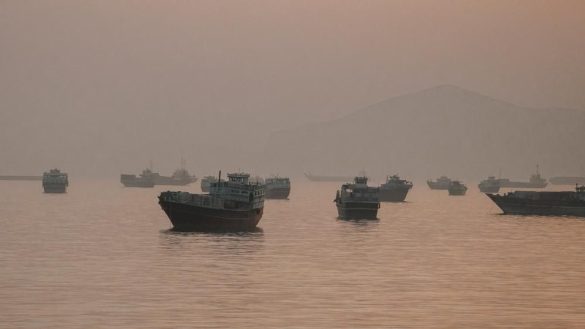
Meanwhile, an Iranian provincial official said no vital infrastructure or public services were damaged in a US attack on Qeshm Island near the Strait of Hormuz.
Speaking to the semi-official Fars news agency on Monday, the official said the targeted locations were away from residential and commercial areas.
Iranian state media had reported explosions on the island late Sunday.
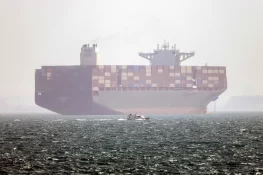
Separately, an unnamed Islamic Revolutionary Guard Corps Navy official told Iranian state media that navigational aid systems in the southern part of the Strait of Hormuz had been destroyed. The official added that no unauthorised vessels had passed through the maritime route overnight.
Qatar Steps Up Diplomatic Efforts
As the conflict continues, Trump is scheduled to meet Qatari Prime Minister and Foreign Minister Sheikh Mohammed bin Abdulrahman Al-Thani at the White House on Monday.
Vice President JD Vance is also expected to meet the Qatari leader, according to a US official.
Qatar has played a central role in facilitating communication between Washington and Tehran, conveying proposals and attempting to narrow differences over Iran’s nuclear programme and the conditions for ending the conflict.
Araghchi claims Iran destroyed or damaged 81 US military aircraft
However, US Secretary of State Marco Rubio indicated on Sunday that negotiations had made little progress and that an agreement was not imminent.
Speaking before travelling to Paris for a G7 foreign ministers’ meeting, Rubio said Trump preferred a diplomatic solution but described Iran’s demands as unrealistic, unacceptable and, in some cases, “outrageous and ridiculous”.
Rubio Defends US Military Action
Rubio said Washington remained open to diplomatic opportunities but acknowledged that reaching an agreement with Iran might not be possible.
He defended Trump’s decision to confront what he described as a longstanding threat to US national security, arguing that preventing Iran from acquiring nuclear weapons should remain a bipartisan priority.
The G7 foreign ministers are scheduled to meet in Paris on Monday and Tuesday, with the conflict involving Iran among the expected discussion topics.
The United States and Israel launched their military offensive against Iran on February 28. A ceasefire was reached in April, followed by a memorandum in June intended to pave the way for a peace agreement. However, negotiations have yet to produce a final settlement.
Rubio’s comments followed recent US strikes on Iran’s Qeshm Island. Trump confirmed on Friday that American forces had targeted Iranian air defence systems.
Asked about the possibility of further military action, Rubio maintained that US operations were defensive and would depend on threats to American forces or maritime traffic.
He said Washington had the right to respond if Iranian forces posed a clear and present danger to US personnel or shipping in the region.