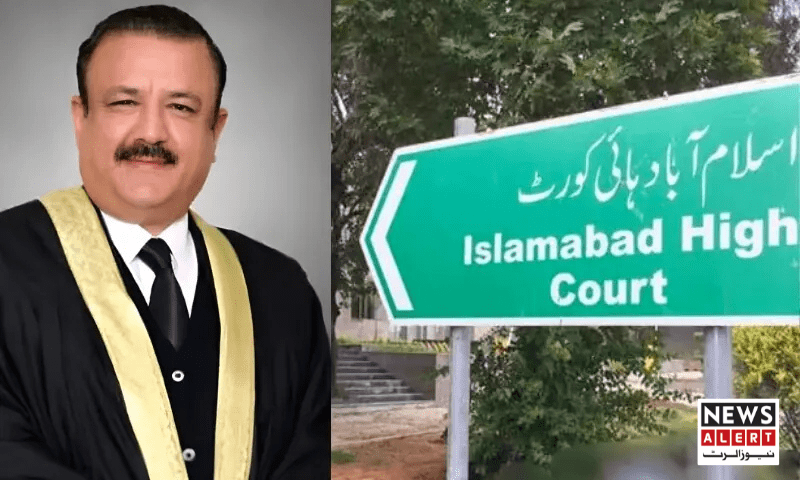
Islamabad – Tensions surfaced at the Islamabad High Court (IHC) as Justice Tariq Jahangiri openly challenged the bench hearing a case linked to his academic degree. He objected to the presence of Chief Justice Sarfaraz Dogar on the bench and asked the court to transfer the matter to another panel.
The case has drawn attention because it involves a sitting judge and raises broader questions about judicial impartiality and due process in Pakistan.
Objection to the Chief Justice’s Bench
Justice Tariq Jahangiri appeared before the court during the hearing, accompanied by lawyers from the Islamabad Bar Association. At the outset, Chief Justice Sarfaraz Dogar remarked that the judge was present and said he wished to hear his statement directly.
Justice Jahangiri immediately raised an objection. He said the Chief Justice should not preside over a case filed against him. According to him, the situation created a clear conflict of interest.
This is a clash of interests, Justice Jahangiri told the court. You cannot sit on a bench hearing a case against me. He formally requested that the case be assigned to a different bench to ensure fairness.
Claim of Degree Authenticity
Justice Jahangiri strongly defended the authenticity of his academic credentials. He stated under oath that his degree was genuine and valid. He stressed that the issuing university had never declared the degree fake or disputed its authenticity.
Placing his hand on the Holy Quran, he reaffirmed his position before the court. He added that allegations against his degree lacked factual grounding and relied on old claims without fresh verification.
Degree-related disputes have surfaced in Pakistan before, especially involving public office holders. Such cases often attract public scrutiny due to their implications for credibility and governance.
Concerns Over Notice and Preparation Time
Justice Jahangiri also raised procedural concerns during the hearing. He told the court that he received the notice only a few days earlier, on Thursday. He said the notice did not include a copy of the petition.
He pointed out that the case relates to events from 30 to 40 years ago. Due to this, he requested additional time to review records and prepare a proper response.
This matter is decades old, he said. I need sufficient time to go through the documents before responding.
Chief Justice Responds
Chief Justice Sarfaraz Dogar rejected the claim of procedural unfairness. He said court records showed that the notice had been issued properly. He also assured Justice Jahangiri that the court would treat him like any other litigant.
You will receive justice in the same manner as everyone else, the Chief Justice said. He added that the court followed standard legal procedures in issuing notices.
Court Orders University Record
To clarify the matter, the Islamabad High Court directed the registrar of Karachi University to appear before the court. The registrar must submit the official academic record related to Justice Jahangiri’s degree.
The court also instructed authorities to provide Justice Jahangiri with copies of the petition and all relevant documents. This step aims to ensure transparency and allow informed arguments from both sides.
The court adjourned the hearing until Thursday, 18 December.
Wider Legal Significance
Legal observers see this development as significant for Pakistan’s judicial system. The case highlights how courts handle internal accountability issues involving judges. It also brings the question of bench composition into sharper focus.
Justice Jahangiri’s insistence on recusal reflects concerns about perceived bias, even within the judiciary. Analysts say such objections test the balance between institutional authority and individual rights.
By calling university officials and demanding original records, the Islamabad High Court appears intent on resolving the dispute through documentary evidence. The outcome may influence future cases involving judicial conduct and conflicts of interest.
For now, the court’s next hearing will determine how the case proceeds and whether the bench composition changes. The legal community and the public will closely watch the proceedings, given their impact on judicial credibility and transparency.