Canada has announced retaliatory tariffs on a range of US products after President Donald Trump’s 50% tariffs on selected Canadian goods came into effect.
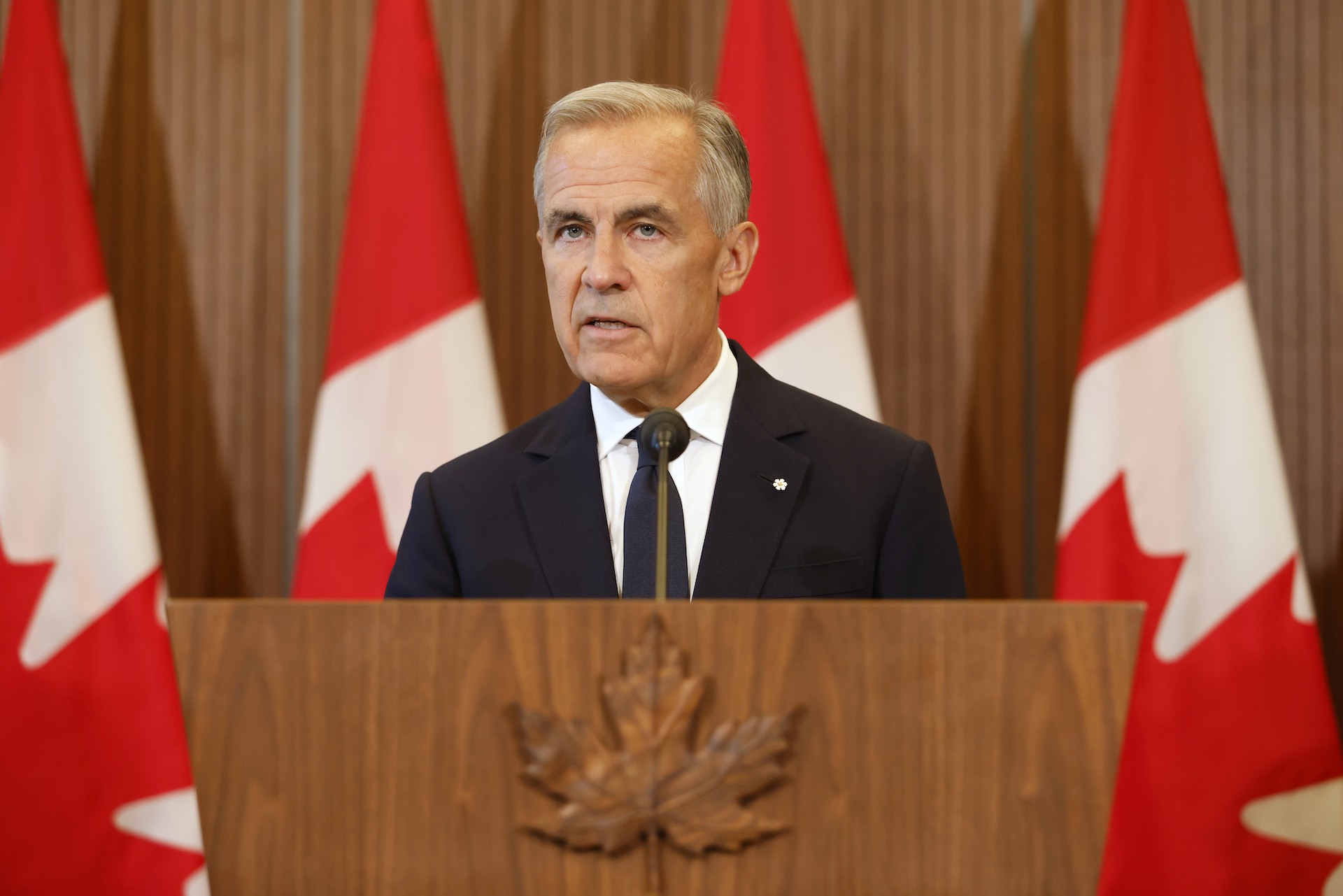
Prime Minister Mark Carney said on Saturday that Canadian countermeasures would begin on September 8, with the government targeting US steel, dairy products, appliances, agricultural equipment, pulp and paper, electronics and other goods.
The decision follows several days of intense negotiations between Ottawa and Washington that failed to produce a new trade agreement.
Carney said Canada would match the latest US duties “dollar for dollar” to protect Canadian workers, farmers, families and businesses.
Asked whether the two countries were now engaged in a trade war, Carney responded that Canada had been attacked economically and needed to defend its interests.
US tariffs affect $20 billion of Canadian exports
The new US tariffs cover around $20 billion worth of Canadian exports, representing approximately 5% of Canada’s exports to the United States.
The affected products include wine, furniture, dairy goods, cement, clothing, fishing rods and hockey equipment, among other items.
These products do not receive the preferential treatment available under the US-Mexico-Canada Agreement (USMCA), which has protected most Canadian exports from additional US tariffs during the past 18 months.
Canadian officials are particularly concerned about the potential impact on industries already facing economic pressure.
Trade experts have warned that vulnerable sectors, including softwood lumber and wine, could experience significant damage if the tariffs remain in place for an extended period. Businesses could face higher costs, reduced demand and possible job losses or closures.
Carney blames last-minute US demands
Carney said negotiations had appeared to make progress before the United States introduced new demands at the last minute.
According to the Canadian prime minister, the proposed US terms were uneconomic and unfair and would have reduced the overall benefits of any agreement for Canada.
He also said some of the demands would have restricted Canada’s ability to negotiate new trade agreements with other countries.
“We cannot accept what they have offered, and we will not give what they have asked,” Carney said.
Carney added that the Canadian government would announce support measures next week for industries affected by the US tariffs. Some of those programmes could remain in place for several years, depending on the economic impact.
Washington says no new talks planned
US Trade Representative Jamieson Greer said Saturday that Washington was not planning additional negotiations with Canada at this stage.
Greer argued that Canada had been offered favourable terms but chose not to accept them.
He also warned that the United States was preparing measures in response to Canada’s planned retaliation.
The latest developments could make the future of the North American trade relationship more complicated, particularly as the two countries prepare for discussions surrounding the USMCA.
Canada relies heavily on the US market, with nearly 70% of its exports going to the United States, making prolonged trade tensions a significant economic risk.
Trump Says US and Canada Reach Deal as Tariffs Face Three-Day Pause
Automotive sector becomes major sticking point
One of the most contentious issues during the negotiations involved tariffs on vehicles.
According to sources familiar with the talks, Canada wanted favourable tariff arrangements proposed for light-duty vehicles to also cover medium- and heavy-duty trucks.
The United States resisted that proposal.
Carney said the US position would have excluded some Canadian-produced models, including Ford F-350, F-450 and F-550 trucks and General Motors’ Silverado, potentially making production in Canada less competitive.
Other US proposals reportedly touched on issues related to Canadian culture, language and sovereignty, although Carney did not provide detailed information about those demands.
Canadian leaders back retaliation
The decision to retaliate has received support from several Canadian political leaders.
Ontario Premier Doug Ford, a prominent critic of US tariffs, said he was pleased that Carney had rejected what he considered a bad agreement.
Ford argued that the proposed deal would have negatively affected Ontario’s automotive, steel and manufacturing sectors.
Meanwhile, Conservative opposition leader Pierre Poilievre called on Canadians to remain united in response to what he described as unfair US measures targeting Canadian jobs and businesses.
Carney, who was elected last year after promising to take a firm negotiating position with Trump, remains broadly popular in Canada. Public opinion surveys have also indicated that many Canadians oppose making major concessions to the US president.
Trade tensions deepen
The latest escalation marks another difficult chapter in the economic relationship between Canada and the United States.
While the new US tariffs affect only a portion of Canada’s exports, the dispute could have wider consequences if both sides continue imposing additional measures.
With Canada’s retaliatory tariffs scheduled to begin on September 8 and Washington indicating that it may respond, businesses on both sides of the border now face greater uncertainty.
The breakdown in negotiations could also complicate efforts to maintain the stability of the wider North American trade framework, increasing pressure on both governments to find a longer-term solution.