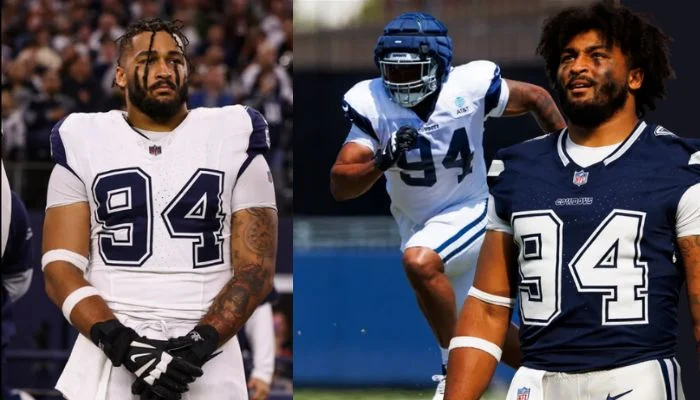
The cause of death of former Dallas Cowboys defensive lineman Marshawn Kneeland has been clarified nearly eight months after his death in November 2025.
According to reports, a postmortem examination conducted by Boston University’s CTE Center found that Kneeland had Stage 1 Chronic Traumatic Encephalopathy (CTE), a progressive brain disease associated with repeated head impacts. The diagnosis was made through an analysis of his brain tissue after his death.
Kneeland, 24, died on November 5, 2025, after authorities found him with what officials described as a self-inflicted gunshot wound following a police pursuit near Dallas Parkway.
Expert Says Diagnosis Was Not Unexpected
Dr. Ann McKee, director of Boston University’s CTE Center, said the findings were not surprising given the center’s previous research on young athletes.
She noted that researchers have identified CTE in nearly half of the athletes under the age of 30 whose brains have been studied after death.
Medical experts emphasize that CTE can only be definitively diagnosed through a postmortem examination, as there is currently no confirmed test to diagnose the condition in living individuals.
Family Says Diagnosis Provides Context
In a statement, Kneeland’s family said the diagnosis offered “important context” regarding some of the personal struggles he had experienced before his death.
However, the family did not suggest that CTE alone caused his death. Medical professionals caution that suicide is a complex issue influenced by multiple biological, psychological, and social factors, and no single condition should be assumed to be the sole cause.
What Is Chronic Traumatic Encephalopathy (CTE)?
CTE is a progressive neurodegenerative disease linked to repeated blows to the head. It has been studied extensively in athletes involved in contact sports such as American football, rugby, boxing, and mixed martial arts.
Researchers believe repeated head trauma can lead to abnormal changes in the brain over many years. Early symptoms may include problems with memory, mood, impulse control, depression, or behavioral changes. In more advanced stages, some people may develop severe cognitive impairment and dementia.
Because the disease can only be confirmed after death, scientists continue to study its long-term effects and the factors that contribute to its development.
TikTok Influencer Dream Doll Brii Killed in Targeted Miramar Shooting
Research Highlights the Risk Among Former NFL Players
The Boston University CTE Center has conducted one of the world’s largest research programs on the condition.
In 2023, the center reported that 345 of the 376 former NFL players whose donated brains had been examined were diagnosed with CTE. Researchers note, however, that these findings come from a selected group of donated brains and should not be interpreted as representing all former NFL players.
Events Leading to Kneeland’s Death
According to Texas authorities, the incident began at approximately 10:33 p.m. on November 5, 2025, when a Department of Public Safety officer attempted to stop Kneeland’s vehicle for speeding. Officials said his car reportedly exceeded 145 miles per hour during the pursuit.
The chase ended after his Dodge Charger left the roadway and came to rest in a grassy area near Dallas Parkway.
When officers searched the vehicle, they found it unoccupied along with an empty holster, prompting a large-scale search involving police officers, K-9 units, and aircraft.
At around 1:30 a.m. on November 6, authorities located Kneeland with an apparent self-inflicted gunshot wound inside a portable toilet nearby.
Ongoing Focus on Player Health
The case has renewed discussion about the long-term effects of repeated head injuries in contact sports and the importance of continued research into brain health, mental health support, and player safety.
Experts stress that while studies have shown an association between repeated head trauma and CTE, every case is unique, and understanding the relationship between brain injury, mental health, and behavior requires further scientific research.