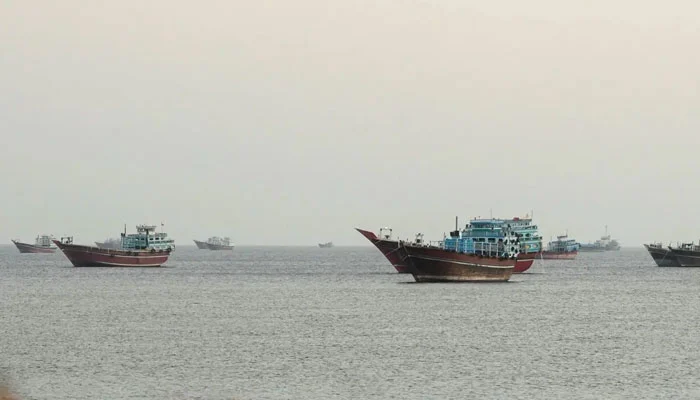
Iran has officially announced the formation of a new body to oversee operations in the Strait of Hormuz, a strategically vital waterway through which a significant portion of global oil and gas shipments pass. The announcement was made by Iran’s Supreme National Security Council on Monday.
New “Persian Gulf Strait Authority” Established
According to the statement posted on the Council’s official X account, the new body—named the Persian Gulf Strait Authority (PGSA)—will be responsible for providing “real-time updates” on maritime activity and operational developments in the Strait of Hormuz.
The Revolutionary Guards’ naval forces also reshared the announcement, although Iranian officials have not yet provided detailed clarification on the authority’s full mandate or operational scope.
Earlier reports from Iranian state-linked media suggested that the PGSA could function as a centralized system for monitoring, regulating, and coordinating shipping traffic through the strategic waterway.
Background: Strategic Importance of Hormuz
The Strait of Hormuz is one of the world’s most important energy transit routes, with roughly one-fifth of global oil and liquefied natural gas shipments passing through it under normal conditions. Any disruption in the area has immediate consequences for global energy markets.
Iran has significantly tightened control over the strait since the outbreak of conflict with the United States and Israel in late February, during which maritime activity was heavily disrupted. A fragile ceasefire has been in place since April 8, but tensions remain high.
Iran’s Supreme Leader Says New Strait of Hormuz Policy Will Bring Stability
Impact on Global Shipping and Markets
Iranian authorities have previously indicated that shipping through the strait will not return to pre-conflict conditions. Officials have also suggested the introduction of toll systems and regulatory mechanisms for vessels passing through the waterway.
Reports earlier this month claimed that Iran had already begun receiving revenue from maritime charges linked to the strait, further signaling a shift toward tighter administrative control over the route.
The announcement of a formal authority has raised concerns among international observers, as it could further complicate already fragile shipping routes and energy supply chains.
Ongoing Regional Developments
Iranian lawmakers and security officials have hinted in recent weeks that a “professional traffic management mechanism” for Hormuz would soon be unveiled, suggesting that the new authority is part of a broader restructuring of maritime control.
While details remain limited, the move underscores Iran’s intention to maintain strong oversight over one of the world’s most sensitive maritime chokepoints amid ongoing geopolitical tensions.