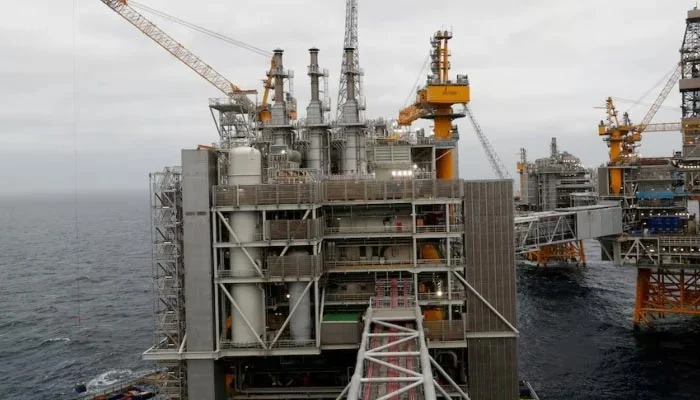
Government expects investments to approach $1 billion if exploration progresses to advanced drilling stages.
Pakistan has formally reopened its offshore oil and gas exploration sector after nearly twenty years, marking a significant step in the country’s efforts to strengthen energy security and attract large-scale investment. The development comes as the government signed Production Sharing Agreements (PSAs) and Exploration Licences (ELs) for 23 offshore blocks under the Offshore Bid Round 2025.
The agreements were signed in a ceremony attended by Federal Minister for Petroleum Ali Pervaiz Malik. The exploration areas are located in the Indus and Makran offshore basins near the coastal regions of Sindh and Balochistan.
Major Offshore Expansion Announced
According to the Petroleum Division, the Offshore Bid Round 2025 covered approximately 54,600 square kilometres of Pakistan’s offshore territory. As a result of the bidding process, 23 exploration blocks have been awarded to different local and international energy companies.
Two of these offshore blocks — Offshore Deep-C and Offshore Deep-F — had already been signed in December 2025 involving Mari Energies Limited, Turkish Petroleum Overseas Company and Fatima Petroleum Company Limited. With the signing of the remaining agreements, the process for the entire offshore portfolio has now been completed.
Officials described the move as an important milestone for Pakistan’s energy sector, particularly because offshore exploration activities had remained limited for years.
Investment Could Reach Nearly $1 Billion
The Petroleum Division stated that the initial phase of exploration is expected to attract investments of around $82 million during the first three-year licence period.
However, if exploration produces encouraging results and moves into advanced drilling operations, total investment may rise close to $1 billion.
The first phase will include:
- Geological studies
- Geophysical analysis
- Seismic surveys
- Data processing and interpretation
If commercially viable hydrocarbon reserves are identified, exploratory drilling operations will begin in the second phase.
Mari Energies Emerges as Key Player
Among participating companies, Mari Energies became the largest stakeholder in the offshore initiative. The company secured participation in all 23 offshore blocks, including operating rights in 18 blocks and partnership roles in five others.
Meanwhile, Oil and Gas Development Company Limited (OGDCL) and Pakistan Petroleum Limited (PPL) each secured eight exploration blocks.
Other companies participating in the initiative include Prime Global Energies Limited, United Energy Pakistan Limited and Orient Petroleum Incorporation.
Why This Matters for Pakistan
Pakistan has long faced challenges related to energy imports, which place pressure on foreign exchange reserves and increase energy costs. According to official figures, only 18 offshore exploratory wells have been drilled since the country’s independence despite Pakistan possessing an offshore area of nearly 282,623 square kilometres.
Government officials believe that successful discoveries could reduce dependence on imported fuel, attract foreign investment and create broader economic opportunities.
In addition, participating companies have committed to supporting social welfare and capacity-building projects in coastal regions of Sindh and Balochistan, potentially bringing development benefits to local communities alongside energy exploration efforts.