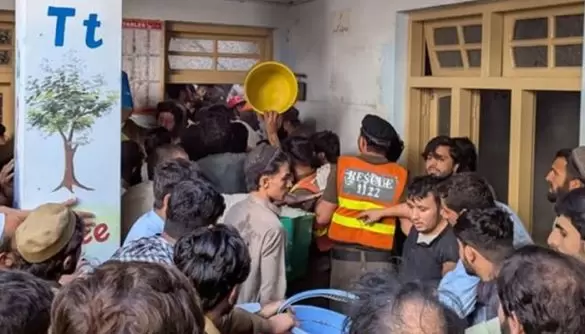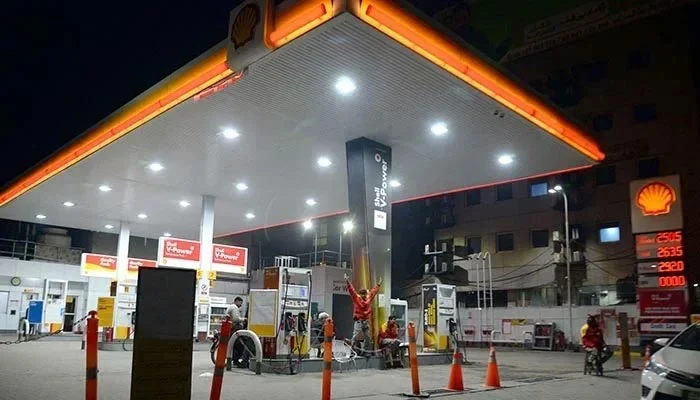
Petrol pumps across Pakistan will remain closed for 24 hours, beginning 6:00am on Thursday and ending at 6:00am on Friday, after petroleum dealers announced a nationwide strike against the government’s daily petroleum pricing mechanism.
The announcement was made by the Petroleum Dealers Association, whose representatives said the policy of revising fuel prices every day is unacceptable and has created uncertainty for dealers and consumers alike.
Dealers Reject Daily Fuel Price Changes
Addressing a press conference, Petroleum Dealers Association representative Malik Khuda Bakhsh said the decision to observe the strike was taken after consultations following a meeting with the Oil and Gas Regulatory Authority (OGRA).
“We are going on strike tomorrow for 24 hours,” he said, reiterating the association’s opposition to daily fluctuations in petrol and diesel prices.
A day earlier, the All Pakistan Petrol Pumps Owners Association (APPPOA) had also announced its support for a nationwide shutdown after negotiations with the government failed to produce an agreement.
APPPOA President Nadeem Hussain said the association cannot accept daily changes in petroleum prices under any circumstances.
Public Transport and Goods Vehicles Join Strike
The protest has expanded beyond petroleum dealers.
According to APPPOA, public transport operators will also suspend services during the strike in solidarity with petrol pump owners.
The Pakistan Mini Mazda Goods Transport Association has likewise announced that its vehicles will stop operating from midnight, with President Haji Sher Ali Chaudhry saying transporters are suffering financial losses due to frequent fuel price changes.
He urged the government to withdraw the daily pricing policy.
Government Defends Daily Pricing Policy
The federal government introduced the new fuel pricing framework to align Pakistan’s petroleum prices more closely with international market trends.
Under the policy, OGRA publishes daily ex-depot prices based on the average international petroleum prices recorded over the previous seven days.
According to Petroleum Minister Ali Pervaiz Malik, the system is intended to improve transparency and ensure that changes in global oil prices are reflected more quickly in domestic fuel prices.
Oil Prices Climb to One-Month High as US-Iran Conflict Raises Supply Concerns
Under the approved framework:
- OGRA can announce daily petrol and diesel prices without prior approval from the prime minister or federal cabinet.
- Prices announced on Fridays remain unchanged during Saturdays and Sundays.
- The petroleum levy cannot exceed the limit approved by the federal cabinet.
- Any revision to the petroleum levy requires approval from the Finance Division.
Business Community Calls for Dialogue
The Pakistan Business Forum (PBF) has urged petroleum dealers to reconsider the planned strike, warning that a nationwide shutdown could negatively affect the economy and inconvenience the public.
PBF Chief Organiser Ahmad Jawad said dealers are already receiving a margin of around Rs8 per litre, which he described as adequate under current circumstances.
However, he also urged the government to review its daily pricing policy, arguing that businesses need greater price stability to plan their operations.
Jawad further suggested suspending the petroleum levy for one month to provide temporary relief to consumers amid rising inflation.
Daily Pricing Policy Challenged in Court
Meanwhile, the government’s daily fuel pricing mechanism has also been challenged in the Lahore High Court.
A petition filed by a private organisation argues that the policy has contributed to persistent inflation and that consumers have not received proportional relief when international oil prices decline.
The petitioner has asked the court to declare the daily pricing mechanism unlawful, contending that arbitrary fuel price determination is inconsistent with constitutional and legal principles.
Impact on Consumers
If the strike proceeds as announced, fuel stations across the country are expected to remain closed for a full day, potentially disrupting travel, freight movement, and public transportation.
Authorities have not yet announced any contingency measures, while discussions between the government and industry representatives are expected to continue as both sides seek a resolution to the dispute over daily petroleum pricing.