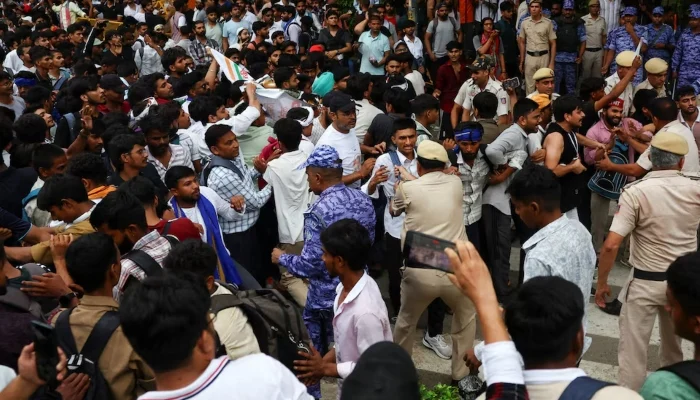
Police in India’s capital New Delhi stopped supporters of the youth-led “Cockroach” movement from marching towards Parliament on Monday after authorities denied permission for the demonstration.
The protest, held on the opening day of Parliament’s monsoon session, is being viewed as one of the biggest public challenges to Prime Minister Narendra Modi’s government during his third term.
Police Action
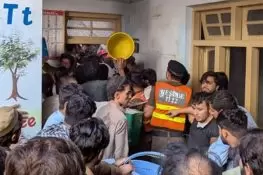
Thousands of demonstrators gathered at Jantar Mantar, with police citing overcrowding and security concerns for refusing permission for the march.
Television footage showed police using batons against some protesters in a heavily barricaded area. However, Delhi Police denied using excessive force, saying the protest was being handled “professionally.”
According to Deputy Commissioner of Police Sachin Sharma, around 10,000 protesters had assembled at the site, raising concerns about public safety.
Protesters Demand Action
As demonstrators arrived peacefully despite rainy weather, they chanted slogans calling for the resignation of Education Minister Dharmendra Pradhan and Prime Minister Narendra Modi.
Protest organisers said they remained open to talks with the government but insisted that action must be taken to address corruption and repeated examination paper leaks.
Students participating in the protest said they wanted an end to alleged irregularities in competitive examinations, arguing that repeated paper leaks have undermined confidence in India’s education system.
Movement’s Origin
The Cockroach Janta Party (CJP) movement began after question papers for India’s national medical entrance examination were leaked in May, affecting more than two million students and forcing authorities to conduct the exam again.
Indian Activist Sonam Wangchuk Hospitalised After 20-Day Hunger Strike Amid Exam Reform Protest
Initially driven through social media, the movement rapidly expanded, attracting millions of online supporters before evolving into nationwide street protests. It has also received support from some opposition political parties.
Wangchuk’s Hunger Strike
Environmental activist Sonam Wangchuk, who joined the protest on June 28, has been on an indefinite hunger strike in support of the movement.
After being moved to hospital over the weekend, Wangchuk said he would end his fast if the government accepted responsibility for failures in the examination system or if lawmakers formally committed to addressing the issue of paper leaks.
He also said he was willing to end the hunger strike if leaders from different political parties met him in hospital and assured him they would raise the matter in Parliament.
Youth Frustration
Analysts say the movement reflects growing frustration among young Indians over unemployment and repeated examination controversies.
According to government data, India’s overall unemployment rate stood at 3.1% in 2025, but unemployment among people aged 15 to 29 was significantly higher at 9.9%. The rate reached 13.6% in urban areas compared with 8.3% in rural regions.
The protests have brought renewed attention to concerns over education, employment opportunities and transparency in India’s competitive examination system.