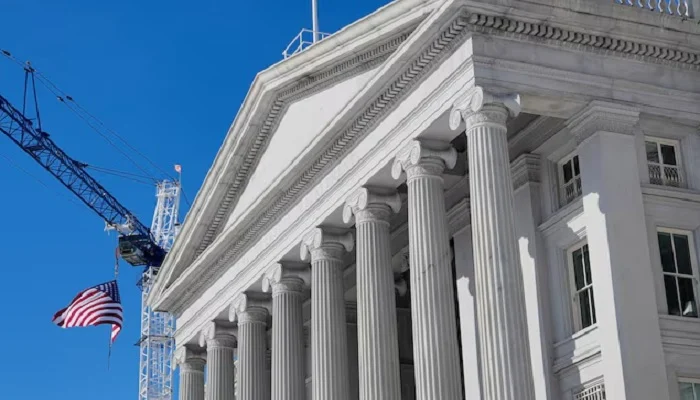
The US Treasury Department has imposed sanctions on a Turkish investment bank and two of its subsidiaries, accusing them of facilitating trade between China and Iran’s Islamic Revolutionary Guard Corps (IRGC) Qods Force.
The action against Istanbul-based Golden Global Yatirim Bankasi Anonim Sirketi, asset manager Golden Global Portfoy Yonetimi Anonim Sirketi and asset leasing company Golden Global Varlik Kiralama Anonim Sirketi is part of the Trump administration’s broader campaign to intensify economic pressure on Tehran.
The move is notable because it marks the first time a bank in a NATO member country has been targeted under the current sanctions campaign, according to experts.
Turkish bank cut off from US dollar system
The Treasury’s Office of Foreign Assets Control (OFAC) added all three entities to its Specially Designated Nationals list, effectively cutting them off from the US dollar-based financial system.
The Treasury also issued a general license allowing transactions necessary to wind down business with the sanctioned entities.
Treasury Secretary Scott Bessent said the latest action was intended to send a warning to financial institutions that Washington believes are facilitating trade with Iran and the IRGC.
“We know who you are, we know where you are, and we will continue to take action together with our allies and partners,” Bessent said.
He separately warned that another bank could face sanctions as early as next week.
Golden Global rejects US allegations
Golden Global Yatırım Bankası, which is ranked as Turkey’s 35th-largest bank, rejected the allegations.
The bank said it had complied with local and international banking and compliance requirements and would pursue its legal rights against what it described as unfounded allegations.
It also said the individuals and entities named in the OFAC decision were not its customers and that it had no direct or indirect dealings with them.
According to TheBanks.EU database, Golden Global Yatirim Bankasi held total assets of around 25 billion Turkish lira, or $516.63 million, in 2025.
Trump threatens to halt trade with deficit countries unless Fed cuts rates
Treasury alleges Iran oil money network
The US Treasury alleged that Golden Global was established to help Iran’s shadow banking network transfer oil revenues from China to Turkey, where the funds could then be converted into cash and gold through money exchangers.
The department also said the bank knowingly offered correspondent banking services to Iranian financial institutions, facilitating transactions through accounts controlled by the IRGC Qods Force and its proxies.
Among those cited by the Treasury was Turkish businessman Sitki Ayan and companies linked to him, which were sanctioned by Washington in 2022.
Experts warn of wider financial impact
Miad Maleki, a sanctions expert at the Foundation for the Defence of Democracies, described Golden Global as a relatively small bank but said its targeting carried a broader message for Turkey.
He warned that foreign banks continuing to conduct business with Golden Global could also face exposure to US sanctions.
“The knock-on effect is the real point of an action like this,” Maleki said.
Another sanctions expert, Brett Erickson of Obsidian Risk Advisors, questioned how much impact the move would have on Iran’s economy.
“The sanctioning of Golden Global will marginally increase pressure on Iran,” Erickson said, while warning that putting additional economic pressure on Tehran could also prompt retaliation.
US expands pressure on Iran’s financial network
The latest move follows Washington’s decision last week to impose restrictions under the Patriot Act on branches of Egyptian lender Banque Misr in the United Arab Emirates over dealings with Iran.
The restrictions would prevent the affected branches from conducting US dollar transactions and are due to take effect after 30 days. The measures do not apply to Banque Misr’s head office or branches in other locations.
Bessent last month described the administration’s approach as an “economic onslaught” aimed at Iran’s financial connections around the world.
The Treasury is seeking to intensify pressure on Tehran as Washington attempts to force the Iranian government back to the negotiating table.