NEW DELHI: Indian social activist Sonam Wangchuk has emerged as one of the most prominent faces of the youth-led movement that intensified nationwide protests over examination paper leaks, culminating in the resignation of India’s Education Minister Dharmendra Pradhan.
The 59-year-old activist, widely known for his work in education reform and environmental conservation, joined the campaign by observing a 26-day hunger strike, lending momentum to protests spearheaded by the Cockroach Janta Party (CJP) and students across India.
Following Pradhan’s resignation on Saturday, Wangchuk described the development as a victory for democratic participation.
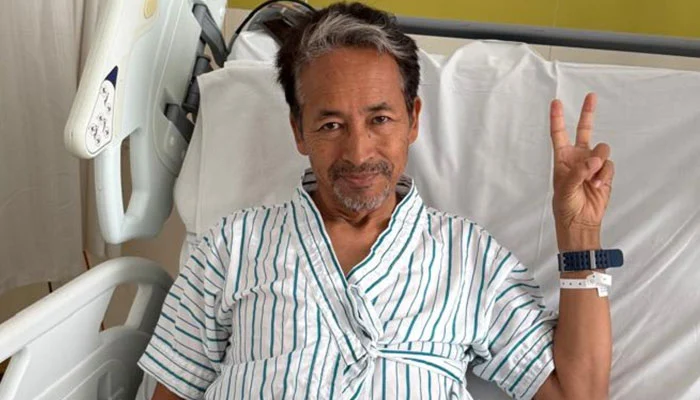
“It’s a victory of democracy, direct democracy… straight from the streets,” Wangchuk said from his hospital bed after ending his fast.
He also congratulated the youth movement for sustaining peaceful demonstrations.
“It’s a victory of peace, patience & perseverance. Congratulations CJP, Gen Z of the nation and thank you all citizens for shedding fear and rising up from every corner of the nation.”
Hunger strike boosted nationwide movement
Although Wangchuk has long been associated with campaigns concerning India’s Himalayan region of Ladakh, his support for students protesting exam paper leaks introduced him to a new generation of young Indians.
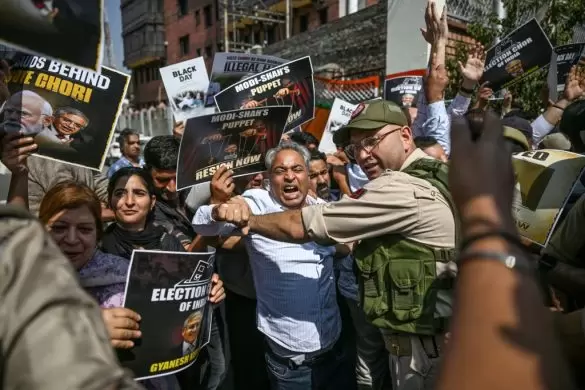
His prolonged hunger strike, combined with the nationwide sit-ins and demonstrations, helped transform the issue into a broader youth movement demanding accountability, education reforms and government action.
Before police shifted him to hospital after nearly four weeks without food, many supporters compared him to Mahatma Gandhi because of his commitment to non-violent protest.
Rejecting those comparisons, Wangchuk said:
“I am no Gandhi, no hero. I’m just an ordinary citizen who has not shied away from his responsibilities.”
He urged citizens to become agents of change themselves rather than waiting for leaders.
“Don’t look for a hero in others. Be the hero of your own life and fulfill your responsibilities.”
Education reformer and environmental campaigner
Popularly known as “Sonam Sir”, Wangchuk has spent decades working on education reform and sustainable development in Ladakh.
Born in 1966 in the remote village of Ulaytokpo, he began teaching fellow students while studying engineering and later founded the Students’ Educational and Cultural Movement of Ladakh (SECMOL) to improve educational opportunities in the region.
His innovative environmental projects—including the creation of “ice stupas,” artificial glaciers that store winter water for summer irrigation—earned international recognition.
In 2018, he received the Ramon Magsaysay Award, often referred to as Asia’s Nobel Prize, for his contributions to education and environmental conservation.
Indian Activist Sonam Wangchuk Hospitalised After 20-Day Hunger Strike Amid Exam Reform Protest
Advocacy for Ladakh
In recent years, Wangchuk has become a leading advocate for greater autonomy and environmental protection in Ladakh.
He was jailed for nearly six months in 2025 following protests demanding statehood for the region. Wangchuk denied allegations that he had incited violence during the demonstrations.
According to Indian media reports, his father, Sonam Wangyal, served as a minister in the former state of Jammu and Kashmir, and former Prime Minister Indira Gandhi had previously intervened during one of Wangchuk’s earlier hunger strikes related to affirmative action for Ladakh residents.
Calls for reforms after minister’s resignation
Despite celebrating the resignation of the education minister, Wangchuk said the movement’s work was not over.
Sharing a photograph from his hospital bed while flashing a victory sign, he wrote:
“From accountability, now to reforms.”
His remarks signal that activists now intend to push for broader reforms to India’s examination and education systems following weeks of nationwide protests.