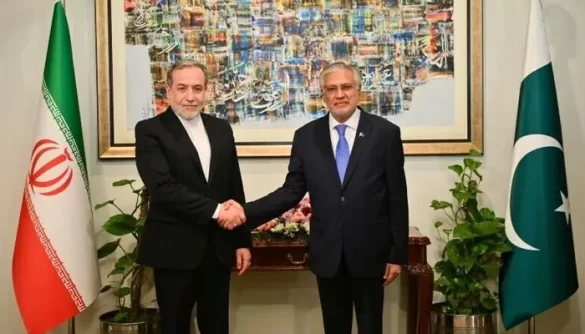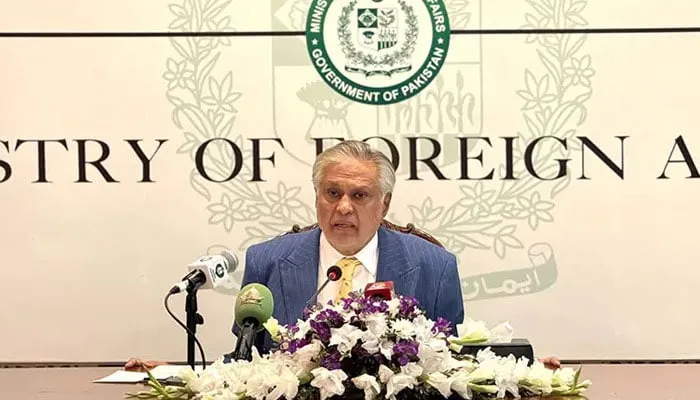
Deputy Prime Minister and Foreign Minister Ishaq Dar briefed the Senate on Pakistan’s diplomatic efforts following the US-Israel strikes on Iran, asserting that Tehran had agreed not to acquire nuclear weapons while emphasizing Pakistan’s support for Iran’s right to a peaceful nuclear programme.
Iran-US Nuclear Diplomacy
Dar informed parliamentarians that during meetings with US Secretary of State Marco Rubio, it was confirmed that Iran agreed not to build nuclear weapons, while the US reportedly sought the complete dismantling of Iran’s nuclear programme.
He stressed Pakistan’s readiness to facilitate mediation between Iran and the United States in Islamabad. Prime Minister Shehbaz Sharif and Chief of Army Staff Asim Munir played active roles in diplomatic and defence-level engagements.
Dar added that Pakistan immediately contacted the Iranian Foreign Minister after the attacks, condemning the strikes and conveying condolences over the martyrdom of Supreme Leader Ayatollah Ali Khamenei.
Regional Coordination and Back-Channel Diplomacy
The deputy premier outlined Pakistan’s extensive diplomatic contacts with countries including Turkiye, Maldives, Bangladesh, Iran, Uzbekistan, Saudi Arabia, UAE, Qatar, and Oman.
He said Oman had reported positive progress in Iran-US talks, but the attacks occurred despite ongoing negotiations. Pakistan’s efforts included back-channel diplomacy to prevent escalation and ensure a peaceful resolution, which the Iranian leadership fully recognized.
Dar emphasized Pakistan’s stance:
- Support for Iran’s peaceful use of nuclear energy.
- Opposition to escalation dragging Pakistan into the conflict.
- Condemnation of attacks on Gulf countries while facilitating assurances to Iran that its territory would not be used for military operations.
Protecting Pakistani Citizens
Dar informed the Senate that roughly 35,000 Pakistanis were in Iran, with 792 already evacuated. The Taftan-Zahedan border remained operational, though airspace closures temporarily affected travel. He assured that the government was fulfilling its responsibility to ensure citizen safety.
Regional Security and Stability
Dar reiterated that Pakistan’s diplomatic stance aimed to:
- Prevent further escalation in the Middle East.
- Maintain coordination with Saudi Arabia, Oman, and other regional states.
- Avoid military entanglement while encouraging diplomatic solutions.
He described the situation as highly challenging, with the entire region in a conflict-like environment, and reaffirmed Pakistan’s continued engagement to maintain peace and stability