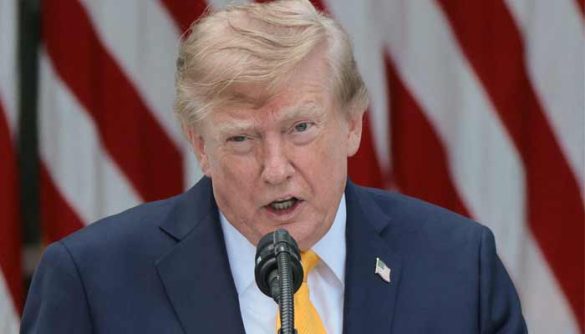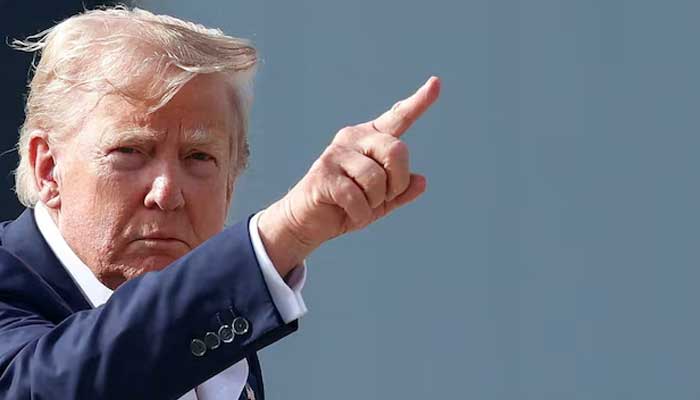
Tel Aviv/Jerusalem/Washington: US President Donald Trump announced on Monday that he had ordered a five-day postponement of any military strikes against Iranian power plants. The decision came as the conflict, now in its fourth week, risked further escalation.
US-Iran Talks
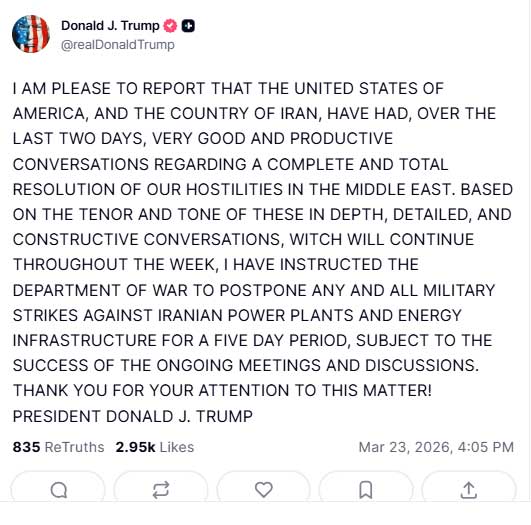
Trump stated on his Truth Social platform that the United States and Iran had engaged in “VERY GOOD AND PRODUCTIVE” discussions over the past two days regarding a “COMPLETE AND TOTAL RESOLUTION OF HOSTILITIES IN THE MIDDLE EAST.” He added that he instructed the US Defense Department to delay the planned strikes pending the outcome of these discussions.
Iranian Response
Iran’s Fars News Agency denied that any direct communications or negotiations had taken place with the US or via intermediaries. Citing an unnamed source, Fars claimed that Trump retreated after learning that Iran could retaliate by targeting all power plants in the region.
The Iranian Revolutionary Guards had previously warned that any attack on their power infrastructure could provoke retaliatory strikes against Israeli power plants and US bases across the Gulf.
Impact on Markets
Trump’s announcement briefly caused Brent crude oil prices to fall nearly 13 percent, dropping below $100 per barrel, before recovering to around $105. Global stock markets also rebounded, with US futures reversing losses to gain over 2 percent.
The potential strikes had raised fears of major disruptions, not only to Iran’s electricity supply but also to Gulf neighbors, who rely heavily on electricity to run desalination plants for drinking water. Bahrain and Qatar depend almost entirely on these plants, while the UAE and Saudi Arabia meet a significant portion of their water needs through desalination.
Strait of Hormuz and Global Energy
Iran has effectively closed the strategic Strait of Hormuz, a vital route through which approximately one-fifth of the world’s oil and liquefied natural gas flows. Any military action in the region could have serious consequences for global energy markets and regional stability.
Humanitarian and Strategic Stakes
More than 2,000 people have already been killed since the US and Israel launched military operations on February 28. Attacks on electricity infrastructure could worsen humanitarian conditions, disrupt water supplies, and intensify fears of a wider regional conflict.