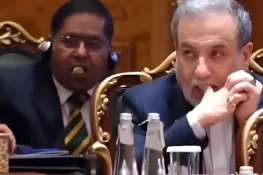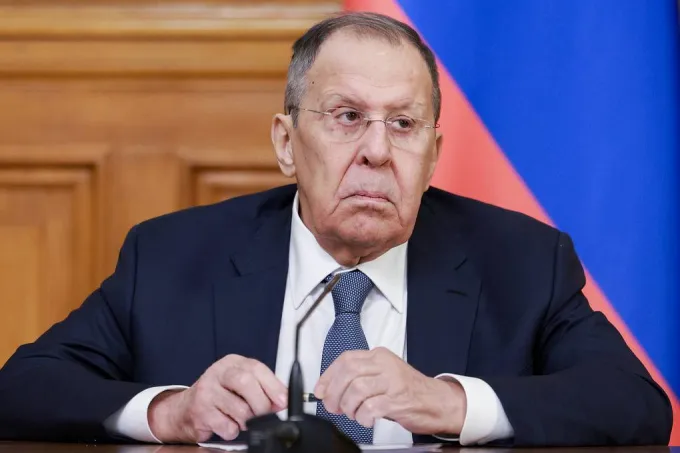
During a visit to China, Russian Foreign Minister Sergey Lavrov has defended Iran’s position on its nuclear program and called for continued dialogue between Tehran and Washington to ease rising regional tensions.
The remarks come at a time of heightened instability in the Middle East, particularly surrounding maritime security and nuclear concerns.
Comments on Strait of Hormuz Tensions
Lavrov stated that Gulf Arab countries understand Iran’s potential move to close the Strait of Hormuz as a response to what he described as “American aggression.”
The Strait is one of the world’s most critical energy transit routes, and any disruption is widely seen as having immediate global economic consequences.
Call for US-Iran Dialogue
The Russian foreign minister emphasized that Moscow is actively encouraging continued diplomatic engagement between the United States and Iran in order to reduce tensions over maritime security and nuclear-related disputes.
Iran Allegedly Used Chinese Spy Satellite to Track US Bases, Reports FT
He said dialogue remains the only viable path to avoid further escalation in the region.
Position on Iran’s Nuclear Program
Lavrov also addressed concerns surrounding Iran’s uranium enrichment activities, stating that Russia would support any solution acceptable to Tehran.
He further claimed that the International Atomic Energy Agency (IAEA) has never found evidence that Iran’s uranium enrichment program is intended for military purposes.
Criticism of US Policy
In his remarks, Lavrov urged the United States to adopt a more realistic approach and warned against continued military pressure in the Middle East, arguing that such actions are also affecting US allies in the region.
Broader Geopolitical Context
The comments reflect Russia’s broader diplomatic positioning, where it continues to support Iran politically while calling for negotiations rather than military escalation.
Analysts say the situation around the Strait of Hormuz and Iran’s nuclear program remains one of the most sensitive flashpoints in global geopolitics, with potential implications for energy markets and regional security.