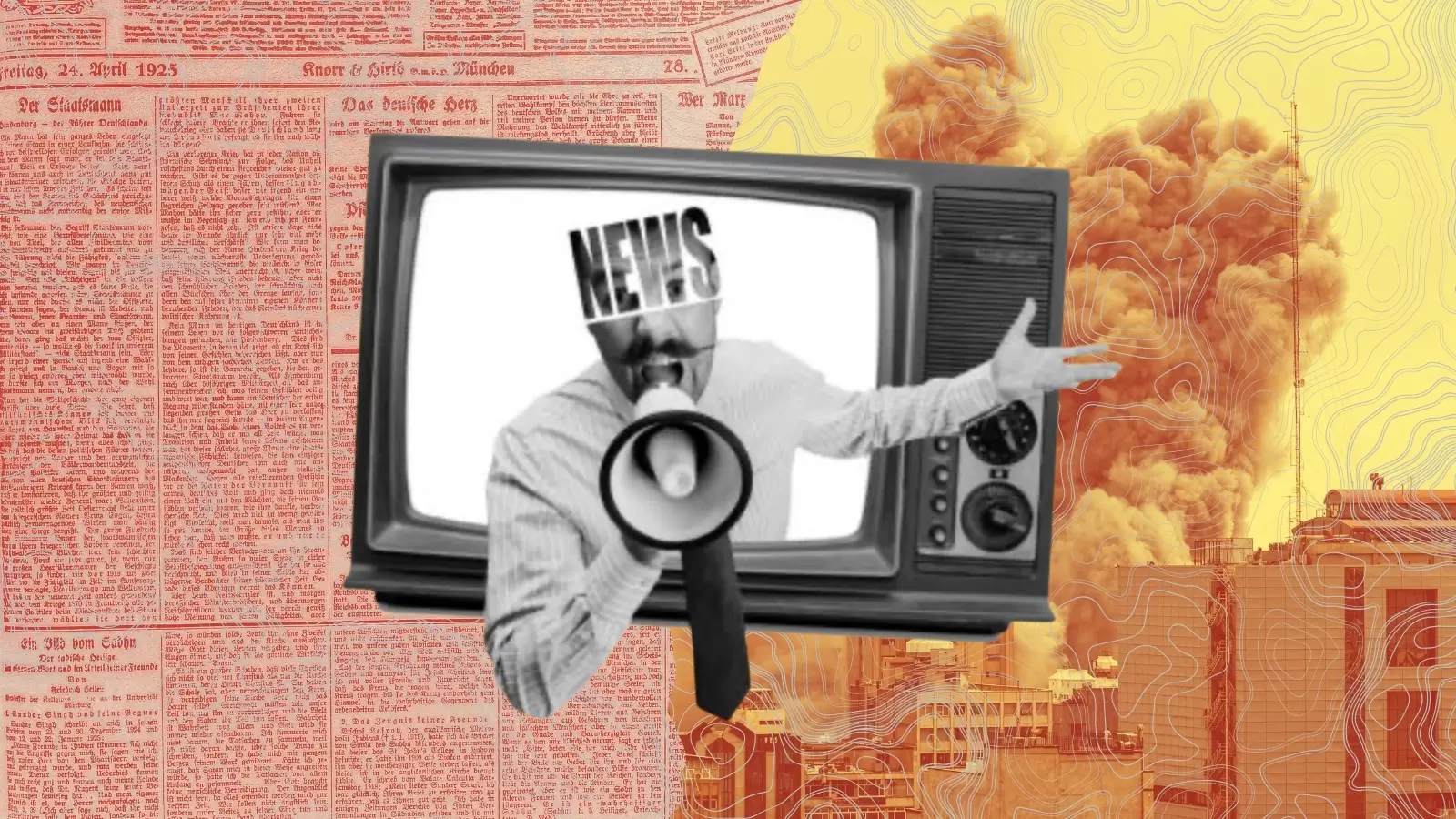
The idea that “truth is the first casualty of war” is not new. However, in today’s digital age, the problem is no longer the absence of information. Instead, it is the overwhelming volume of it—and how it is shaped, filtered, and framed. With high-resolution footage, live updates, and constant social media coverage, audiences are exposed to more war imagery than ever before. Yet, paradoxically, understanding the full reality of conflict has become more difficult.
From Silence to Overexposure
In earlier conflicts, information was often limited, creating what was described as the “fog of war.” Today, that fog has been replaced by constant visibility. Strikes, casualties, and destruction are broadcast in real time, often directly to mobile phones.
However, this visibility does not automatically lead to clarity. Instead, it raises a new issue: perspective. What is shown, how it is shown, and what is left out can significantly influence how audiences interpret events.
The Power of Framing in Modern Media
Experts argue that modern media rarely needs to spread outright false information. Instead, subtle choices in language, headlines, and imagery can shape public perception.
For example, describing one side’s military action as “self-defence” while labeling the other’s response as “provocation” creates an immediate moral imbalance. Similarly, focusing on state narratives while minimizing civilian experiences can reshape how entire conflicts are understood.
Media scholars, including Noam Chomsky, have long pointed out that limiting the range of acceptable opinion—while allowing debate within it—can still control the overall narrative.
Field Marshal Asim Munir Urges Dialogue and De-escalation During Iran Visit
Selective Language and Missing Context
One of the strongest criticisms raised by analysts is the selective use of context. Complex histories involving sanctions, covert operations, and long-standing regional tensions are often reduced to brief background notes, rather than central explanations.
This can create what some experts describe as “manufactured clarity”—where audiences are presented with simplified versions of highly complex conflicts. As a result, responsibility and causality can become blurred.
Academic perspectives also highlight how terms like “conflict” or “Iran war” can unintentionally shift focus away from specific political and military decisions, making violence appear more abstract and less accountable.
Digital Media and Competing Narratives
Unlike the Iraq War era, today’s media environment includes digital platforms, independent creators, and alternative voices. Social media has introduced competing interpretations of major conflicts, challenging traditional newsroom dominance.
However, this also creates fragmentation. Different audiences may consume entirely different versions of the same event, depending on platform, region, or ideological preference.
Structural Pressures in Journalism
Journalists operate under significant constraints, including speed, editorial policies, and reliance on official sources. These pressures can influence not only what is reported, but also how it is reported.
Short-form content, especially on digital platforms, often reduces complex conflicts into simplified narratives. While this increases accessibility, it can also remove essential historical and political context.
War Is in No One’s Interest, Says Iran’s President Pezeshkian
The Human Cost Behind the Language
Another major concern raised by researchers is the invisibility of ordinary people in war coverage. Civilians often appear only as statistics or brief visuals, rather than as central figures in the story.
In conflicts involving Iran, Israel, Lebanon, and the wider region, this gap becomes more pronounced due to restrictions, censorship, and security conditions. As a result, the lived experiences of civilians are frequently underrepresented in global narratives.
Conclusion: A Battle of Perception
Modern warfare is no longer fought solely on the battlefield. It is also fought through language, framing, and interpretation. While technology has made wars more visible, it has also made narratives more powerful.
In this environment, the key challenge is not just accessing information, but understanding how that information is shaped—and recognizing what may be missing from the story entirely.