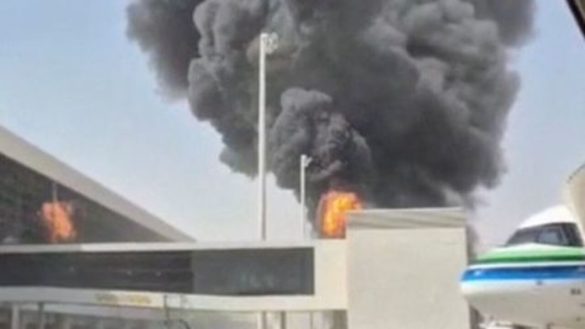
The United States and Iran have exchanged military strikes for the first time since signing their recent peace agreement, raising fresh concerns about the durability of the ceasefire and the future of diplomatic efforts to end months of conflict in the Middle East.
The latest escalation began after Washington accused Tehran of carrying out a drone attack on a commercial cargo ship transiting the Strait of Hormuz. Iran denied responsibility for violating the ceasefire and responded with retaliatory strikes against US positions in the Gulf, further increasing regional tensions.
US Launches Retaliatory Strikes
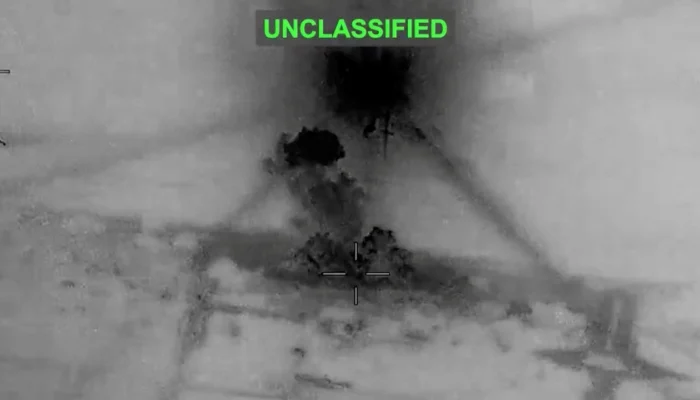
According to the US Central Command (CENTCOM), American forces carried out precision strikes against Iranian missile storage facilities, drone sites, and coastal radar installations.
The US military described the operation as a direct response to what it called an “unprovoked attack” on a commercial vessel navigating through the Strait of Hormuz. American officials said the incident constituted a clear breach of the ceasefire agreement reached earlier this month.
US President Donald Trump condemned the reported attack, calling it a “foolish violation” of the ceasefire and warning that further aggression would invite additional consequences.
Vice President JD Vance also issued a strong warning, stating that any future attacks on American interests would be met with an immediate response.
Iran Responds with Counterstrikes
Shortly after the US operation, Iranian state media reported that the Islamic Revolutionary Guard Corps (IRGC) had launched retaliatory strikes against US military sites in the Gulf region.
The Guards said the attacks were carried out in response to the American strikes and warned that any further military action by Washington would trigger an even broader response.
Iranian media also reported explosions near the southern port city of Sirik, where local officials said projectiles had struck the Taherouyeh pier area.
The exchange marked the first direct military confrontation between the two countries since the signing of the recent peace framework.
Strait of Hormuz Again at the Centre of Tensions
The latest hostilities have once again placed the Strait of Hormuz at the centre of international concern.
The strategic waterway is one of the world’s most important energy corridors, carrying approximately 20% of global oil and liquefied natural gas exports. Any disruption to shipping through the strait has the potential to affect international energy markets and global trade.
Iran has previously warned vessels against entering or leaving the Gulf without its approval. Nevertheless, commercial shipping has continued, with many vessels reportedly using alternative routes closer to Oman’s coastline.
According to shipping data, dozens of cargo vessels continued transiting the waterway despite the renewed tensions.
Maritime Evacuation Efforts Interrupted
Before the latest escalation, the maritime situation had shown signs of improvement.
The International Maritime Organization (IMO) had coordinated an evacuation operation that enabled more than 115 commercial vessels and approximately 2,500 seafarers stranded during earlier tensions to leave the region safely.
However, officials said those efforts were suspended following the renewed exchange of military strikes.
Despite the deterioration in security, international oil prices declined, suggesting that markets remained cautiously optimistic that shipping through the Strait of Hormuz would continue.
US and Iran Clash Over Nuclear Inspections and Frozen Assets Despite Ongoing Peace Talks
Lebanon Peace Framework Moves Forward
While tensions escalated between Washington and Tehran, diplomatic efforts continued on another front.
The United States, Israel, and Lebanon signed a framework agreement in Washington aimed at reducing tensions along the Israel-Lebanon border.
US Secretary of State Marco Rubio described the agreement as an important first step toward establishing lasting peace and security in southern Lebanon.
Israeli Prime Minister Benjamin Netanyahu welcomed the framework, saying it would strengthen regional stability and reduce Iranian influence in Lebanon.
Meanwhile, Lebanese President Joseph Aoun described the agreement as an initial step toward enabling displaced civilians to return home under the authority of the Lebanese state.
However, the Iran-backed group Hezbollah criticised the framework, arguing that Lebanon’s security situation should remain part of the broader negotiations between Iran and the United States.
Nuclear Programme Remains a Key Challenge
Beyond military tensions, Iran’s nuclear programme continues to be one of the most contentious issues in negotiations between Tehran and Washington.
Director General of the International Atomic Energy Agency, Rafael Grossi, stressed that any lasting agreement would require a robust international verification mechanism to ensure Iran does not develop nuclear weapons.
Grossi noted that while Iran has repeatedly stated it does not intend to build nuclear weapons, international confidence depends on transparent inspections and effective monitoring rather than political assurances alone.
The interim agreement also proposes reducing Iran’s stockpile of highly enriched uranium through a process known as downblending, which lowers uranium enrichment levels to reduce proliferation risks.
Diplomatic Progress Faces a Critical Test
The latest exchange of strikes highlights the fragile nature of the recently signed peace accord.
Although negotiations between Washington and Tehran remain ongoing, renewed military action demonstrates how quickly isolated incidents can threaten broader diplomatic progress.
With discussions continuing on issues ranging from maritime security and sanctions relief to nuclear safeguards and regional stability, the coming weeks are expected to be crucial in determining whether both sides can prevent further escalation and preserve the momentum toward a lasting peace agreement.