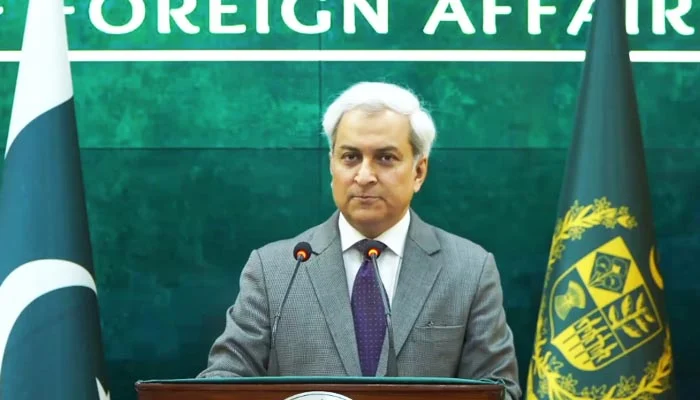
Prime Minister Shehbaz Sharif will travel to Tehran on Friday to attend the funeral prayers of Iran’s late Supreme Leader, Ayatollah Ali Khamenei, before proceeding to Türkiye for an official visit, Pakistan’s Foreign Office announced on Thursday.
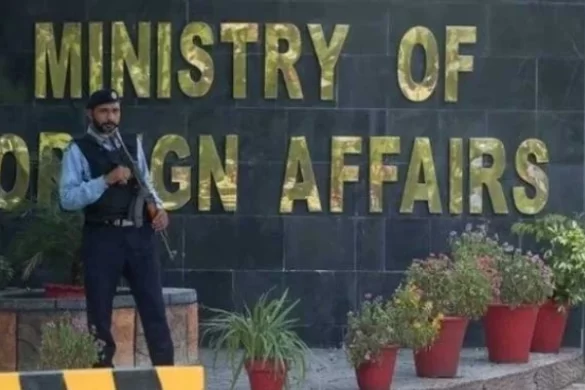
Speaking at the weekly media briefing in Islamabad, Foreign Office spokesperson Tahir Hussain Andrabi said the prime minister will be accompanied by Deputy Prime Minister and Foreign Minister Ishaq Dar, along with other members of the federal cabinet.
Pakistan to Express Solidarity with Iran
According to the Foreign Office, Prime Minister Shehbaz will participate in the funeral prayers for Ayatollah Khamenei and convey Pakistan’s condolences and solidarity with the people and government of Iran.
The spokesperson said the visit reflects the longstanding ties between Pakistan and Iran and Islamabad’s support for its neighbouring country during a difficult period.
According to Iranian state media, Ayatollah Khamenei was killed on February 28 during the opening day of Israeli and U.S. military strikes on Iran. Funeral prayers are scheduled to take place in Tehran on July 4, while his burial is expected on July 9 in his hometown of Mashhad.
Türkiye Visit to Follow
After concluding his visit to Iran, Prime Minister Shehbaz will travel to Türkiye at the invitation of President Recep Tayyip Erdoğan.
The Foreign Office said the prime minister is scheduled to address a business conference in Istanbul, where he is expected to discuss trade, investment, and economic cooperation between Pakistan and Türkiye.
Pakistan Continues to Support U.S.-Iran Talks
During the briefing, Andrabi also spoke about the ongoing indirect negotiations between the United States and Iran being held in Doha.
He said Pakistani mediators held separate meetings with representatives of both countries and that discussions had made positive progress on several aspects of the Islamabad Memorandum of Understanding (MoU).
According to the spokesperson, both sides agreed to continue negotiations, with Pakistan and Qatar expected to remain involved as facilitators for future rounds of dialogue.
He also noted that Deputy Prime Minister Ishaq Dar has remained in contact with senior officials from Saudi Arabia, China, Bahrain, Iran, the United Kingdom, and the European Union as part of Pakistan’s ongoing diplomatic engagement.
PM Shehbaz Sharif Likely to Visit Iran for Ayatollah Ali Khamenei’s Funeral
Pakistan Protests Karachi Attack
Andrabi said Pakistan had summoned Afghanistan’s chargé d’affaires to lodge a formal protest over the recent militant attack on a Pakistan Rangers camp in Karachi.
He said Pakistan’s ambassador in Kabul had also delivered an official protest note to Afghanistan’s Ministry of Foreign Affairs.
According to Pakistan’s military, three Rangers personnel were killed and four others injured in the attack. The military said three alleged attackers were killed during the operation, while one Afghan national was arrested in an injured condition. Pakistani authorities have alleged that the attack was carried out by Jamaat-ul-Ahrar and have raised concerns about the use of Afghan territory by militant groups. Afghan authorities have previously denied allowing their territory to be used for attacks against neighbouring countries.
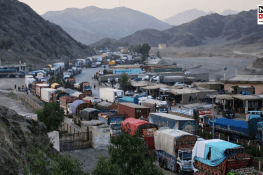
The spokesperson added that Pakistan would take action against Afghan nationals residing in the country without valid visas or legal documentation.
Pakistan Reiterates Position on the Indus Waters Treaty
Commenting on the recent international seminar on the Indus Waters Treaty held in Islamabad, Andrabi said participants emphasized the importance of preserving the decades-old water-sharing agreement and resolving disputes through diplomatic channels.
He reiterated Pakistan’s opposition to India’s unilateral suspension of the treaty and said participants warned against the use of water as a political or strategic tool.
According to the Foreign Office, any attempt to deny a country access to its shared water resources could pose a serious threat to regional peace and stability.