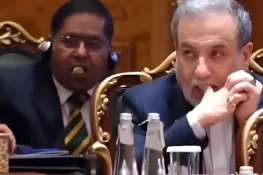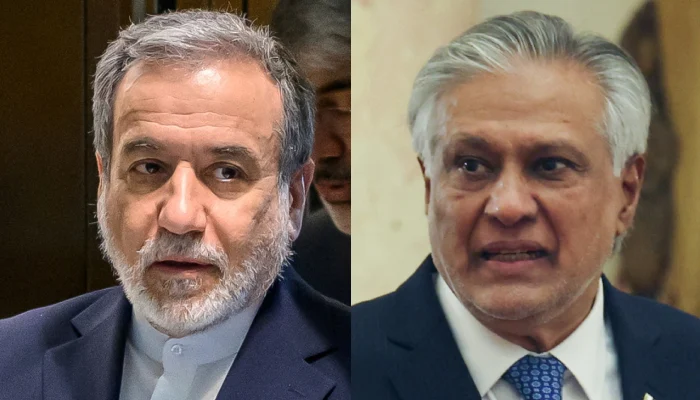
ISLAMABAD: Deputy Prime Minister and Foreign Minister Ishaq Dar has reaffirmed Pakistan’s commitment to resolving regional disputes through dialogue and diplomacy during a telephone conversation with Iranian Foreign Minister Abbas Araghchi, as tensions continue to escalate in the Middle East.
According to a statement issued by the Foreign Office (FO) on Sunday, the two leaders discussed the evolving regional security situation and exchanged views on the latest developments. During the conversation, Dar stressed that diplomacy remains the only sustainable way to resolve conflicts and ensure lasting peace in the region.
Dar Calls for Restraint and De-escalation
The Foreign Office said Ishaq Dar urged all parties to exercise restraint and support efforts aimed at reducing tensions in accordance with the Islamabad Memorandum of Understanding (MoU) agreed upon in June.
Emphasising Pakistan’s longstanding support for peaceful conflict resolution, Dar stated that “dialogue and diplomacy remain the only viable path to resolving disputes and achieving lasting peace and stability in the region.”
He also reiterated Pakistan’s willingness to continue playing a constructive role in initiatives aimed at promoting regional peace, stability and diplomatic engagement.
According to the Foreign Office, both foreign ministers agreed to remain in close contact regarding future developments.
Rising Tensions Between the US and Iran
The conversation took place against the backdrop of renewed military confrontation between the United States and Iran.
According to recent developments, US and Iranian forces have exchanged missile and drone strikes after Tehran launched attacks targeting US military facilities in several Gulf states. Iran also announced that it had once again closed the Strait of Hormuz, one of the world’s most strategically important shipping routes.
Iranian officials said the closure followed incidents involving commercial vessels, claiming that a warning shot struck a ship travelling on what Tehran described as an unauthorised route. Iranian authorities later stated that another vessel had also been intercepted.
The Islamic Revolutionary Guard Corps (IRGC) said the Strait of Hormuz would remain closed until what it described as an end to US interference in the region.
Tougher Phase of US-Iran Talks Lies Ahead, but Final Deal Within Reach: Ishaq Dar
Global Energy Markets Under Pressure
The Strait of Hormuz is regarded as one of the world’s most critical energy corridors, with roughly 20% of global oil supplies passing through the waterway under normal circumstances.
Any disruption to maritime traffic in the strait has significant implications for international energy markets. The latest escalation has already contributed to higher global oil prices, raising concerns over inflation and supply chain disruptions.
Energy analysts continue to monitor the situation closely as uncertainty surrounding regional security persists.
Diplomatic Efforts Continue
The latest tensions follow the collapse of a ceasefire announced earlier between Washington and Tehran. Earlier this week, US President Donald Trump declared that the ceasefire agreement had effectively ended, although he indicated that negotiations with Iran could still continue.
Iranian Foreign Minister Abbas Araghchi has accused the United States of violating the ceasefire framework, maintaining that any agreement must be implemented on the basis of mutual compliance.
Separately, Iran’s senior negotiator and Parliament Speaker Mohammad Baqer Qalibaf reiterated Tehran’s position in a social media post, stating that Iran would not accept what it described as one-sided agreements.
Pakistan Reaffirms Support for Peace
Pakistan has consistently called for dialogue, restraint and diplomatic engagement in response to regional conflicts. Islamabad maintains that peaceful negotiations remain the most effective means of addressing disputes and preventing further instability in the Middle East.
The Foreign Office said Pakistan will continue supporting diplomatic initiatives aimed at reducing tensions and encouraging all parties to return to the negotiating table in the interest of regional and international peace.