ISLAMABAD: Pakistan’s power sector is facing growing financial pressure as rising capacity payments increase electricity costs, while the rapid adoption of solar energy is changing how households and industries obtain power.
An analysis by a petroleum engineer and oil and gas management professional argues that solarisation has become an important source of economic relief by reducing dependence on expensive imported energy. However, the country’s existing power purchase agreements (PPAs), particularly their capacity payment provisions, continue to place a substantial burden on consumers and the national economy.
The writer estimates that Pakistan has paid approximately $40 billion in capacity charges between 2019 and 2026 and argues that renegotiating power agreements is essential to address the growing imbalance between installed generation capacity and actual electricity consumption.
How Pakistan’s capacity payment problem began
Pakistan’s electricity sector faced mounting pressure between 2004 and 2008, when international oil prices increased sharply. At the time, the country relied heavily on furnace oil for power generation, making electricity production vulnerable to fluctuations in global energy markets.
According to the analysis, Pakistan’s annual energy import bill increased approximately 2.5 times between 2004 and 2008.
The government attempted to cushion the impact through subsidies. However, limited fiscal resources and delayed payments to independent power producers (IPPs) created working-capital shortages across the power supply chain.
These payment delays contributed to the accumulation of circular debt, which subsequently became a persistent challenge for the electricity sector.
In 2013, the government introduced a new power policy and an ambitious programme to expand generation capacity in response to projected economic growth and rising electricity demand.
However, electricity consumption did not increase as quickly as installed capacity, creating a growing financial burden through capacity payments.
Capacity charges rise as electricity demand lags
The National Electric Power Regulatory Authority’s (NEPRA) State of the Industry report for 2017 highlighted concerns about the widening gap between generation capacity and electricity consumption.
The report recorded capacity payments of Rs280 billion in fiscal year 2015-16 and Rs350 billion in 2016-17.
According to the writer, maintaining capacity payments at the 2015-16 level in 2018-19 would have required electricity sales to increase by 57% compared with the preceding fiscal year. Actual growth, however, was reportedly below 2%.
The situation became more difficult after 2019, when economic growth generally remained sluggish. With electricity consumption failing to keep pace with the available generation capacity, capacity charges accounted for an increasingly significant share of payments to power producers.
The writer estimates that Pakistan has paid around $40 billion in capacity charges during the 2019-2026 period.
The analysis argues that better-designed power purchase agreements, including stricter conditions governing when capacity payments become due, could have reduced some of this financial burden.
Solar power transforms Pakistan’s energy landscape
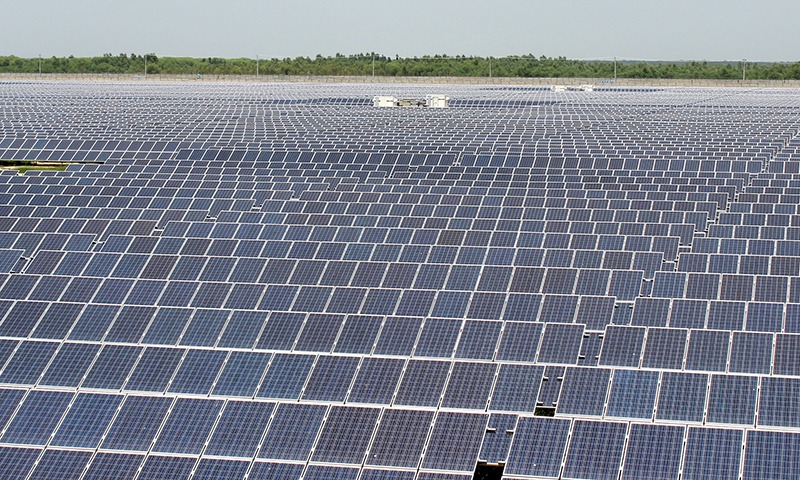
The rapid expansion of solar energy has added another dimension to the country’s electricity challenges.
Pakistan introduced net-metering regulations in September 2015, allowing eligible solar users to export surplus electricity to the grid under the applicable arrangements.
The financial benefits of solar power encouraged households and businesses to install their own systems, reducing their dependence on electricity supplied by distribution companies.
The writer cites industrial electricity consumption figures to illustrate the change. Grid-based industrial consumption reportedly fell from 29,885 gigawatt-hours (GWh) in fiscal year 2020-21 to 29,114 GWh in 2024-25, despite a 7.5% increase in users in the category connected to distribution company grids.
The analysis also estimates that only around 13% of Pakistan’s aggregate installed solar capacity is integrated with the grid.
Using a solar capacity utilisation factor of 18% to 22%, the writer estimates that off-grid solar installations alone could provide more than 10,000 megawatts of effective capacity.
The estimate highlights the scale of the shift towards privately generated electricity, although the precise contribution of off-grid solar depends on installed capacity, sunlight conditions, system efficiency and actual usage.
The growing availability of batteries could accelerate the trend by allowing households and businesses to use stored solar energy after sunset.
Why solar adoption matters for the economy
Solar power can reduce the need for imported fuels and lower electricity expenses for consumers who generate a substantial share of their own power.
The writer argues that these savings extend beyond household utility bills, supporting industrial activity and reducing pressure on Pakistan’s energy import bill.
However, widespread solar adoption also presents a financial challenge for the existing grid. Power producers continue to receive capacity payments under contractual arrangements, while lower grid consumption can reduce the revenue available to cover fixed system costs.
This creates a difficult situation in which consumers who remain dependent on grid electricity may face higher tariffs as the costs of maintaining generation capacity are spread across a smaller volume of electricity sales.
The analysis therefore argues that policymakers must consider both the benefits of solarisation and the financial sustainability of the national grid.
Electricity pricing and gas use need reconsideration
The writer also questions a tariff structure that generally charges higher rates per unit for higher levels of electricity consumption.
According to the analysis, encouraging households and commercial users to adopt electricity for cooking and heating could increase grid consumption and help distribute fixed system costs across more units of electricity sold.
The writer further suggests that diverting some gas currently used for power generation towards industrial applications could reduce the need to import expensive liquefied natural gas (LNG).
Such changes would require careful assessment of electricity prices, gas availability, infrastructure requirements and the operational needs of different sectors.
Ending captive power generation presents an opportunity
Another development highlighted in the analysis is the government’s effort to phase out captive power generation and shift the associated industrial load towards the national grid.
The initiative, pursued under pressure from the International Monetary Fund (IMF), could increase grid electricity consumption while freeing up an estimated 280 million standard cubic feet per day (mmscfd) of processed gas for other uses.
The writer says available data for the previous fiscal year suggests that the effort is progressing, but cautions that its long-term success will depend on reliable electricity supplies.
Industrial users often require uninterrupted power and stable voltage to maintain production schedules and protect equipment. If grid reliability fails to meet these requirements, businesses may continue to rely on independent generation or alternative fuels.
Pakistan Emerges as World’s Third-Largest Importer of Solar Panels
Industries turn to alternative energy sources
The shift away from conventional energy sources is also visible in Pakistan’s industrial fuel consumption.
Citing the Energy Yearbook 2025, the writer reports that documented industrial energy consumption declined by approximately 46% between 2020 and 2025.
Solar adoption is one possible factor, but the analysis also points to high utility costs and the use of alternative fuels, including coal and wood.
A recent study cited by the writer found that coal accounted for 20% of the textile sector’s energy mix. The use of solid-fuel boilers has also reportedly increased in recent years.
The brick-kiln industry presents another example of changing fuel patterns. The Energy Yearbook reportedly recorded a 58% decline in coal consumption by volume between 2021 and 2025.
The writer suggests that economic pressures may have encouraged some operators to combine coal with crop residues or use other materials, including used tyres, lubricating oil, plastic and textile waste.
Such practices raise environmental and public-health concerns because burning unsuitable fuels can release harmful pollutants. Monitoring fuel use and enforcing environmental standards remain important alongside efforts to reduce energy costs.
What Pakistan needs to do next
The analysis identifies three priorities for Pakistan’s energy policy.
First, policymakers should avoid measures that unnecessarily discourage solar adoption. Solar power can reduce fuel imports and ease the financial burden on households and businesses. Any changes to net-metering or net-billing arrangements should account for their effects on investment, consumer costs and the wider energy system.
Second, power purchase agreements need careful review and renegotiation where appropriate. The writer argues that existing contracts contain provisions that favour sellers and that a better balance is needed between payments to power producers, electricity demand and the interests of consumers. Any renegotiation would need to account for contractual obligations, legal requirements and the need to maintain reliable power supplies.
Third, energy policy must consider environmental commitments. Changes in fuel consumption, the expansion of solar power and the growing use of alternative industrial fuels all affect Pakistan’s carbon footprint and greenhouse gas emissions. The writer says these developments should be assessed against the country’s commitments to the United Nations on emissions reduction.
Balancing solar growth with grid sustainability
Pakistan’s energy transition presents both an opportunity and a policy challenge. Solar power offers households and businesses a way to reduce exposure to expensive imported energy, while the national grid remains essential for many consumers and industries.
At the same time, capacity payments have become a major concern as installed generation capacity exceeds the level of demand needed to spread fixed costs efficiently.
The writer argues that Pakistan must protect the benefits of solarisation while addressing the structural weaknesses in its electricity market. Reviewing power contracts, improving grid reliability, reconsidering tariff incentives and monitoring environmental impacts could help create a more sustainable energy system.