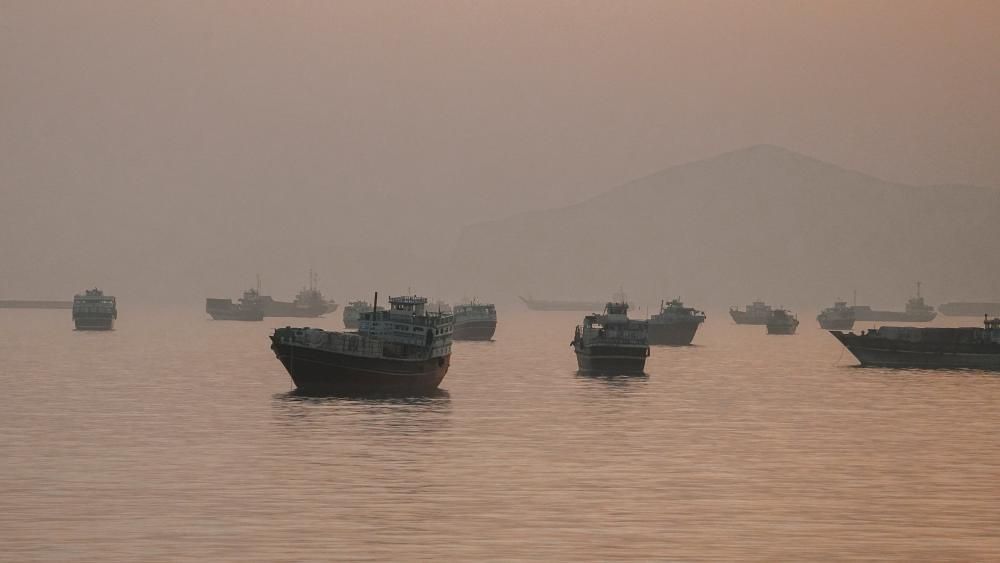
An Iranian provincial official has said that a recent US attack on Qeshm Island caused no damage to vital infrastructure or essential services, while tensions around the Strait of Hormuz continue amid stalled diplomatic efforts.
The official told the semi-official Fars news agency on Monday that the targeted sites were located away from residential and commercial areas and that no essential facilities or services had been affected.
Iranian state media reported explosions late on Sunday on Qeshm Island, which is located near the strategically important Strait of Hormuz.
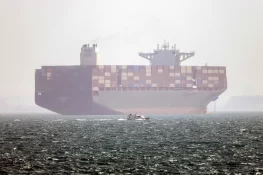
Separately, an unnamed official from the Islamic Revolutionary Guard Corps (IRGC) Navy told Iranian state media that navigational aid systems in the southern part of the Strait of Hormuz had been destroyed. The official also said no unauthorised vessels had passed through the maritime route overnight.
Rubio Sees Little Progress in Talks
Meanwhile, US Secretary of State Marco Rubio suggested on Sunday that reaching a diplomatic agreement with Iran might not be possible in the near future.
Speaking to reporters before departing for Paris to attend a G7 foreign ministers’ meeting, Rubio said several countries were continuing to engage with Tehran and present different proposals, but negotiations were not close to a breakthrough.
“The president would always prefer to solve this and every problem diplomatically. Sometimes that’s not possible, unfortunately,” Rubio said.
He described Iran’s demands as unrealistic, calling them “outrageous and ridiculous”, while maintaining that Washington remained open to diplomatic solutions.
Rubio Defends Trump’s Policy
Rubio also defended President Donald Trump’s handling of the conflict with Iran, which was in its ninth month at the time of his remarks.
He argued that Trump had confronted a longstanding threat to US national security despite the potential political consequences. Rubio said preventing Iran from acquiring nuclear weapons should remain a bipartisan priority in the United States.
His comments came ahead of the G7 foreign ministers’ meeting in Paris, scheduled for Monday and Tuesday, where the conflict with Iran was among the expected discussion points.
Oil Prices Edge Higher After Reported US Strikes on Iran’s Qeshm Island
Conflict and Ceasefire Efforts
The United States and Israel launched a military offensive against Iran on February 28. A ceasefire was reached in April, followed by a memorandum in June intended to pave the way for a peace agreement. However, diplomatic efforts have yet to produce a final settlement.
Rubio’s remarks followed recent US strikes on Iran’s Qeshm Island near the Strait of Hormuz. Trump confirmed on Friday that American forces had targeted Iranian air defence systems.
Asked about the possibility of further military action, Rubio maintained that US operations were defensive and would depend on threats to American forces or maritime traffic in the region.
He said Washington would respond if US personnel faced a threat or if shipping came under danger, adding that the United States considered itself entitled to defend its forces and maritime interests.
Rubio said any further action would depend on the seriousness of the threat and whether Iranian forces were attacking or preparing to attack American interests.