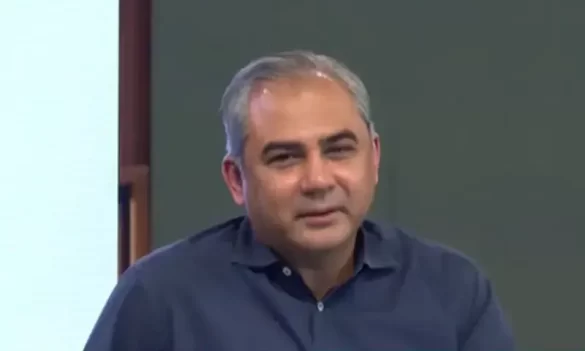
Finance Minister Muhammad Aurangzeb discussed potential US Export-Import Bank financing for Boeing aircraft for Pakistan International Airlines (PIA), refinery upgrades and the Reko Diq mining project during his recent meeting with US Exim Bank Chairman John Jovanovich, the finance minister’s adviser Khurram Schehzad said.
Schehzad clarified that the government is helping the privatised national airline access international financing and suppliers but is not purchasing aircraft for PIA and has not announced any sovereign guarantee or taxpayer-funded loan.
The clarification followed Aurangzeb’s meeting with Jovanovich in New York, where potential financing for PIA aircraft, refinery modernisation and the Reko Diq copper and gold mining project in Balochistan was discussed.
PIA seeks financing for Boeing aircraft
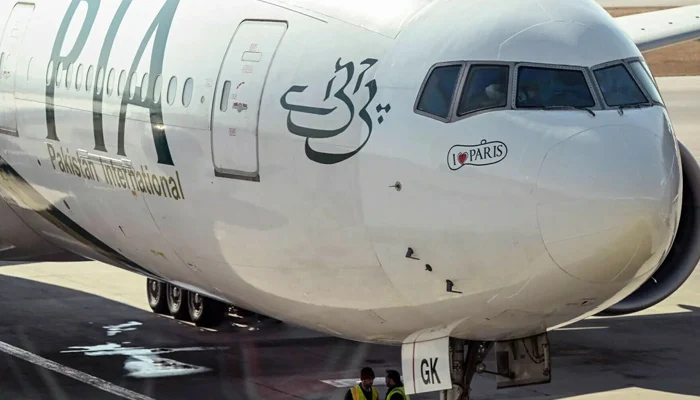
According to the Ministry of Finance, Aurangzeb outlined PIA’s interest in Boeing aircraft, particularly 787 Dreamliners, and discussed a potential financing package covering aircraft and engines.
The finance minister also raised the need for spare parts to help bring grounded Boeing 777 aircraft back into service, the ministry said.
Schehzad said US Exim’s role is to support US exports and jobs, with Boeing aircraft qualifying as US exports. The bank can provide financing support to foreign purchasers of US-manufactured aircraft, including airlines.
He said financing could potentially be secured against the aircraft, with the creditworthiness of the airline or lessee assessed as part of the process.
A sovereign guarantee, therefore, would not automatically be required, according to the adviser.
Government denies hidden subsidy for PIA
Schehzad said the government’s role was to facilitate PIA’s access to international financing, technology and suppliers rather than directly fund the airline’s aircraft purchases.
He rejected descriptions of the potential arrangement as a public loan, hidden subsidy or state backstop.
“The official statement refers to potential US Exim financing support; it does not announce government borrowing for PIA or a sovereign guarantee,” Schehzad said.
He added that Aurangzeb’s engagement with US Exim was broader than PIA and included potential financing for aviation, refinery upgrades and Reko Diq as part of wider Pakistan-US economic cooperation.
Reko Diq, Aviation and Refinery Upgrades Discussed as Finance Minister Meets US EXIM Bank Chairman
Federal Minister for Finance and Revenue, Senator Muhammad Aurangzeb, met with the Chair of the US Export-Import Bank, Mr. John Jovanovich, during his visit to New York to attend… pic.twitter.com/83cKiJJVkb
— Ministry of Finance, Government of Pakistan (@Financegovpk) September 24, 2026
PIA privatised for Rs135 billion
PIA was privatised after an Arif Habib-led consortium won a 75% stake in the national flag carrier with a Rs135 billion bid at an auction held on December 23, 2025.
The winning offer was above the government’s reference price of Rs100 billion.
Transaction documents were signed on January 29, 2026, while management control of PIA was transferred to the investor consortium following the first financial closing on June 29, 2026.
The consortium committed a total investment of Rs180 billion, including Rs55 billion for the government and Rs125 billion in fresh investment in PIA.
Pakistan Hands Over PIA Management to New Owner After First Financial Closing of Privatisation Deal
Privatisation and access to financing
Schehzad said facilitating international financing does not conflict with the government’s policy of reducing the state’s role in commercial activity.
He said privatisation transfers ownership and commercial management to the private sector but does not prevent the government from helping businesses access international financing, technology and suppliers.
The adviser said the government’s approach was aimed at creating greater space for private capital while supporting investment and commercial opportunities.
For PIA, the proposed US Exim engagement could therefore provide a potential financing route for fleet expansion and aircraft-related requirements without the government directly purchasing the aircraft or assuming a publicly announced sovereign financing obligation.