The Federal Reserve raised its benchmark interest rate by a quarter percentage point on Wednesday, taking the target range to 3.75%-4.00%, while signalling that further increases could be needed as inflation remains elevated.
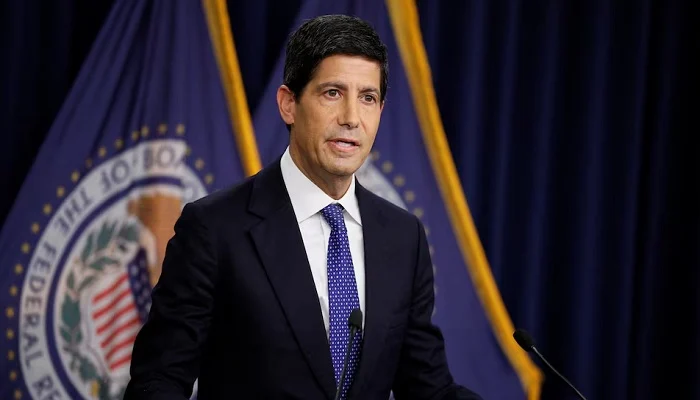
The rate hike was the first such move in three years and the first policy shift under new Federal Reserve Chair Kevin Warsh, who took office in late May after being selected by President Donald Trump.
Updated economic projections showed that 16 of the Fed’s 18 policymakers expect at least one additional quarter-percentage-point increase by the end of 2026. Only two officials projected rates would remain at their current level.
The projections put the federal funds rate at 4.00%-4.25% by the end of both 2026 and 2027.
Inflation remains a key concern
The Fed said inflation remained elevated and that Wednesday’s decision would support a return to its 2% target.
Policymakers pointed to several factors behind persistent price pressures, including US import tariffs, higher energy costs following the start of the US-Israeli war with Iran and strong capital investment linked to the artificial intelligence boom.
Warsh said the US economy had strengthened, with resilient domestic spending, strong productivity growth and robust capital investment contributing to economic activity.
“Inflation remains elevated. Today’s policy action will support a timelier return to the committee’s 2% goal,” the Federal Open Market Committee said in its statement.
Warsh described the rate increase as the “right decision”, saying financial conditions were not broadly restrictive enough to contain inflation.
Trump calls for lower rates
Trump responded by repeating his longstanding call for significantly lower US interest rates.
In a post on Truth Social, the president argued that rates should be reduced to 1% or lower, citing strong investment and economic activity.
His comments came despite the Fed’s assessment that inflationary pressures remained broad enough to require tighter monetary policy.
What Is the Clarity Act? Landmark Crypto Bill Heads to US Senate Markup
Financial markets reacted sharply to the decision. The US dollar strengthened, while the yield on two-year Treasury notes rose to its highest level in more than two years as investors adjusted expectations for future Fed policy.
Rate futures markets were also pricing in a strong possibility of another quarter-percentage-point increase before the end of the year.
Fed raises inflation forecast
The central bank raised its inflation forecast, projecting that the Personal Consumption Expenditures (PCE) price index would increase by 3.7% this year, compared with the 3.6% estimate issued in June.
The Fed does not expect inflation to return to its 2% target until 2029, one year later than previously projected.
Economic growth expectations were revised slightly higher, with GDP now projected to expand 2.3% this year compared with the previous estimate of 2.2%.
The unemployment rate is expected to end the year at 4.1%, an improvement from the 4.3% forecast issued in June.
The Fed’s decision comes less than two months before the US midterm elections, with higher gasoline prices and rising mortgage rates adding to economic pressures facing households.
The average interest rate on a 30-year fixed-rate US mortgage is approaching 7%, while gasoline prices are about one-third higher than a year earlier, according to the report.