Talks between Pakistan and the IMF intensify ahead of Budget 2026–27 amid concerns over inflation and revenue shortfalls.
IMF Proposes Higher Sales Tax Rate
Ahead of the federal budget for 2026–27, the International Monetary Fund (IMF) has reportedly asked Pakistan to increase the standard General Sales Tax (GST) rate from 18% to 19%.
The proposal comes as part of broader discussions between the IMF and Pakistani authorities aimed at addressing gaps in tax collection targets and strengthening fiscal stability.
According to reports, the suggested increase is linked to a shortfall in revenue performance by the Federal Board of Revenue (FBR), which is expected to fall short of its revised collection target despite approaching the Rs13 trillion mark.
Government Pushback Over Inflation Concerns
Pakistani officials, however, are resisting the IMF’s recommendation, arguing that any increase in GST would further intensify inflationary pressure on households already facing high living costs.
Authorities believe that raising indirect taxes could negatively impact consumption, increase prices of essential goods, and place additional burden on lower and middle-income groups.
The government has instead emphasised the need for alternative revenue measures that do not significantly affect inflation or economic growth.
Estimated Revenue Impact of GST Increase
Economic estimates suggest that if the GST rate is increased by 1%, it could generate additional revenue of approximately Rs250 to Rs300 billion for the national exchequer.
The IMF’s proposal is reportedly based on concerns over weak tax performance and the need to meet fiscal targets under the ongoing economic programme.
Inflation projections shared in discussions indicate a possible average Consumer Price Index (CPI) inflation of around 8.4% in the next fiscal year, adding further complexity to policy decisions.
Broader Tax Reforms Under Discussion
Alongside the GST proposal, the IMF has also reportedly suggested reforms in other areas of taxation. These include increasing GST on hybrid vehicles from 8.5% to the standard rate of 18% after the current policy expires.
IMF Ends Pakistan Visit as Government Commits to 2% GDP Primary Surplus Target
Discussions are also ongoing regarding Electric Vehicles (EVs), though no final decision has been reached.
In the retail sector, the IMF has supported a simplified taxation system for small retailers. Under the proposed model, retailers with turnover up to Rs200 million would pay a fixed tax of Rs25,000 annually and be exempt from routine audits, unless significant discrepancies are identified.
Possible Relief and Adjustments in Budget Measures
Reports suggest that while the IMF is pushing for higher indirect taxes, there is also consideration of reducing the Super Tax by 1.5% to 2% in the upcoming budget.
For salaried individuals, negotiations are ongoing to explore possible relief measures, although the IMF has reportedly insisted that any tax concessions must be balanced with alternative revenue sources.
Ongoing Negotiations Ahead of Budget Presentation
Officials describe the discussions as tough and ongoing, with further negotiations expected even after the budget is presented in parliament. Last-minute revisions to the final budget document are also considered likely.
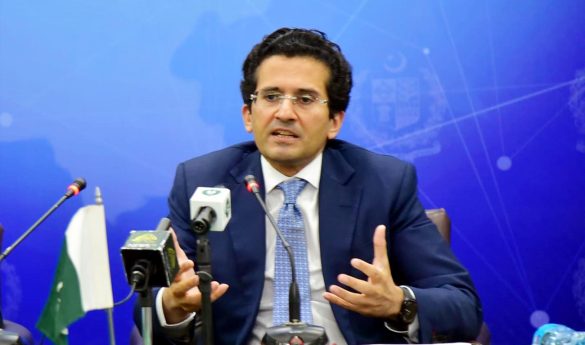
Chairman of the Federal Board of Revenue (FBR), Rashid Mahmood Langrial, however, has denied that any formal proposal to raise GST to 19% is currently under consideration.
As Pakistan and the IMF continue talks, the final shape of Budget 2026–27 is expected to reflect a delicate balance between fiscal discipline, revenue generation, and inflation control.