Indian authorities have launched an investigation into the alleged theft of donations from the Ram Temple in the northern city of Ayodhya, raising fresh concerns about financial oversight at some of the country’s largest religious institutions.
Police began the probe in June and have arrested eight people responsible for handling donations at the temple.
Although officials have not disclosed the exact amount allegedly stolen, Indian media reports estimate the missing funds could total around 30 million Indian rupees (approximately $314,000).
The case has sparked debate over how temples manage the large volumes of cash, gold and other valuables donated by devotees.
Devotees express concern
Many worshippers say donations are made with the belief that the money will be used for religious and charitable purposes.
Ashok Prasad Kushwaha, an auto-rickshaw driver from Delhi who has visited the Ram Temple several times, said the allegations were deeply disappointing.
He said people often donate despite having modest incomes because they trust the funds will be used for “God’s work,” adding that any misuse of those donations feels like a personal loss for devotees.
Experts call for stronger oversight
The alleged theft has once again highlighted concerns over financial accountability at major religious institutions across India.
Rahul Easwar, a Hindu activist and grandson of a former chief priest of Kerala’s Sabarimala Temple, said the main issue is the lack of consistent transparency and accountability.
He recommended measures such as digital accounting systems, mandatory receipts for donations, CCTV monitoring during cash handling and independent financial audits to reduce the risk of fraud.
Experts say the suspects in the Ayodhya case allegedly exploited weaknesses in donation-counting procedures and surveillance systems.
Ram Temple Trust Reshuffles Leadership After Donation Theft Allegations in India
Temple’s importance adds sensitivity
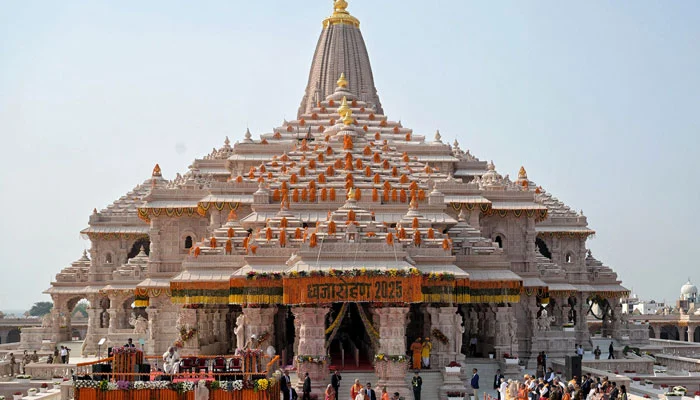
The Ram Temple is one of India’s most significant religious sites.
Inaugurated in 2024 by Prime Minister Narendra Modi, the temple attracts an average of around 90,000 visitors daily, with devotees regularly donating cash, gold, silver and other valuables.
The temple stands on a site long claimed by many Hindus as the birthplace of Lord Ram.
The location was previously occupied by the Babri Mosque, which was demolished by Hindu mobs in 1992, triggering nationwide communal violence that claimed more than 2,000 lives.
In 2019, India’s Supreme Court awarded the disputed land for construction of the temple, paving the way for a nationwide fundraising campaign that, according to the temple trust, raised around $341 million.
Growing religious economy
According to consultancy firm IMARC, India’s religious and spiritual market was valued at $70.14 billion in 2025 and is projected to reach $135.41 billion by 2034.
Legal experts note that religious institutions across India operate under different laws and regulatory frameworks, resulting in varying standards of financial oversight.
Analysts say that as many temples now manage assets and donations worth billions of rupees, stronger governance, transparent accounting practices and independent oversight have become increasingly important to maintain public trust and ensure proper management of devotees’ contributions.