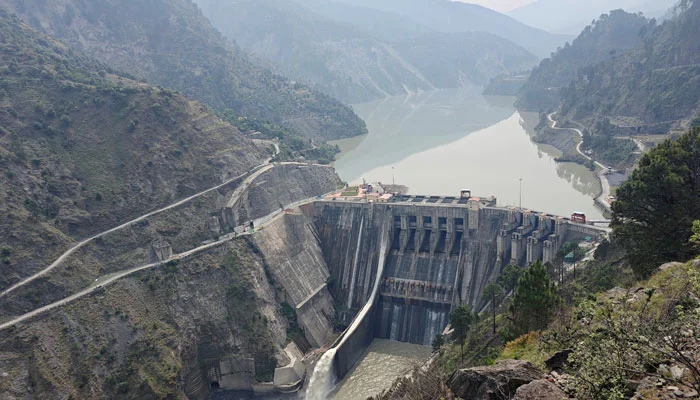
India has said it is actively working to ensure that “not a single drop of water” flows into Pakistan in the coming years, following its suspension of the Indus Waters Treaty (IWT) last year.
The remarks were made by India’s Water Minister CR Patil, who said the move is being pursued under directives from Prime Minister Narendra Modi. His statement has added fresh strain to already tense relations between the two nuclear-armed neighbours.
Pakistan has repeatedly warned that any attempt to alter the natural flow of cross-border rivers would be considered an “act of war,” insisting that the 1960 Indus Waters Treaty remains legally valid and cannot be unilaterally suspended.
What the Indian Minister Said
Speaking to Indian media, CR Patil stated that India is “actively working” on plans to control or redirect river waters flowing into Pakistan.
He further claimed:
“It is certain, not a single drop of water will go [to Pakistan] in the coming years.”
The minister did not provide detailed technical explanations but referred to ongoing policy and infrastructure planning after the treaty suspension.
Background: The Indus Waters Treaty
Indus Waters Treaty is a landmark water-sharing agreement signed in 1960, brokered by the World Bank. It governs the use of six rivers of the Indus basin.
Under the treaty:
- India controls the eastern rivers (Ravi, Beas, Sutlej)
- Pakistan receives rights over the western rivers (Indus, Jhelum, Chenab)
These rivers are vital for Pakistan’s agriculture, which depends heavily on irrigation from the Indus basin.
India Cannot Unilaterally Suspend Indus Waters Treaty: PM Shehbaz
Pakistan’s Response and Concerns
Pakistan’s Climate Change Minister Musadik Malik has previously accused India of attempting to “weaponise water” and violate international commitments.
Islamabad maintains that:
- The treaty has no unilateral exit clause
- Any disruption in water flow would harm millions downstream
- Water should not be used as a political or strategic tool
Officials also warn that reduced river flows could severely impact Pakistan’s agriculture, food security, and rural livelihoods.
Expert View and Practical Limitations
Water and infrastructure experts note that India’s existing dams and hydro projects do not currently have the capacity to fully block river flows into Pakistan.
Instead, they mainly:
- Regulate timing of water release
- Store limited seasonal flows
- Support hydroelectric generation
Major diversion projects, if pursued, would likely take several years to complete. Some regional officials estimate that large-scale structural changes could take at least five years or more before having any measurable impact.
Growing Regional Implications
The dispute comes after India suspended its treaty obligations in 2025 following a deadly incident in Indian-administered Kashmir, which New Delhi blamed on Pakistan—an allegation Pakistan denies.
Since then, both sides have increasingly accused each other of escalating tensions around shared water resources.
Analysts warn that prolonged uncertainty over the treaty could further destabilise regional water security in South Asia, where climate stress and population growth are already putting pressure on river systems.
India’s latest remarks signal a tougher stance on transboundary water sharing, while Pakistan continues to insist on treaty enforcement and international mediation. With no immediate diplomatic breakthrough in sight, the Indus water dispute is once again emerging as a major flashpoint in already strained India-Pakistan relations.