Global oil prices continued to decline on Tuesday, extending losses from the previous session as investors assessed the implications of recent US-Iran peace negotiations and awaited stronger evidence that crude shipments through the Strait of Hormuz are returning to normal.
The cautious market sentiment reflects ongoing uncertainty over the durability of the emerging diplomatic agreement between Washington and Tehran, despite signs of progress in reducing regional tensions.
Oil Prices Extend Losses
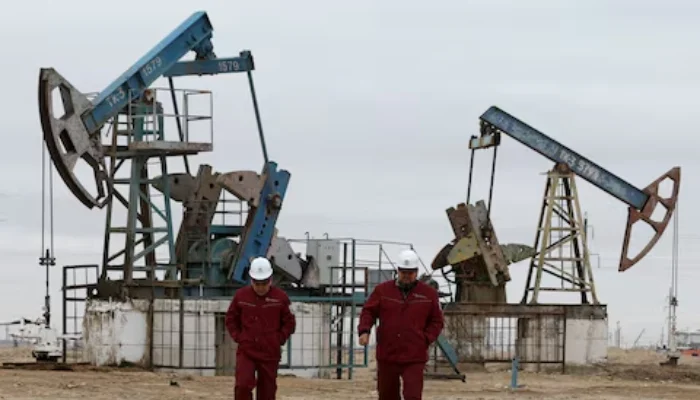
Brent crude futures fell by 20 cents, or 0.3%, to $77.70 per barrel, while US West Texas Intermediate (WTI) crude declined by 12 cents, or 0.2%, to $73.74 per barrel during early trading on Tuesday.
The latest decline follows a sharp drop of more than 3% on Monday after the United States granted Iran a 60-day sanctions waiver following initial peace discussions. Markets also reacted positively to reports of reduced hostilities in Lebanon as part of the broader diplomatic framework being negotiated.
Focus Remains on the Strait of Hormuz
Despite recent diplomatic breakthroughs, investors remain focused on developments in the Strait of Hormuz, one of the world’s most important oil transit routes. Roughly one-fifth of global oil consumption passes through this narrow waterway, making any disruption a major concern for energy markets.
Over the weekend, concerns resurfaced after tensions threatened to undermine the week-old agreement. US President Donald Trump warned that military action could resume if Iran interfered with shipping traffic after Tehran announced the closure of the strategic passage.
While diplomatic efforts have eased immediate fears, traders continue to seek concrete evidence that commercial shipping can move safely and consistently through the region.
Market Skepticism Persists
According to Tim Waterer, Chief Market Analyst at KCM Trade, investors remain cautious because of the long history of distrust between the United States and Iran.
He noted that although markets initially welcomed the roadmap agreed during the talks and the possibility of the Strait of Hormuz reopening fully, traders are now adopting a more measured approach until they see proof that the agreement can withstand future challenges.
Analysts believe that any return to pre-conflict oil price levels may take time, as market participants continue to evaluate political and security risks in the Middle East.
Signs of Improving Oil Traffic
There were, however, some encouraging signs for global energy markets. Ship-tracking data showed that two crude oil tankers carrying nearly two million barrels of oil successfully passed through the Strait of Hormuz on Monday.
The movement suggested that shipping activity is beginning to recover after a slowdown on Sunday, when concerns over safe passage led to weaker traffic flows through the waterway.
A sustained increase in tanker movements could help ease concerns about supply disruptions and support greater stability in oil markets.
Strategic Petroleum Reserve Hits Multi-Decade Low
In a separate development, the US Department of Energy reported that crude oil stocks held in the Strategic Petroleum Reserve (SPR) fell to 331.2 million barrels last week. This represents the lowest level recorded since June 1983.
The decline reflects tighter energy supplies following the recent US-Iran conflict and highlights the importance of maintaining stable oil flows from key producing regions.
Outlook Remains Uncertain
While the latest US-Iran negotiations have improved market sentiment and reduced fears of an immediate escalation, investors remain cautious. The future direction of oil prices will likely depend on whether the peace process continues to advance and whether shipping through the Strait of Hormuz returns to normal levels.
For now, markets appear to be balancing optimism about diplomacy with concerns about the long-term stability of the agreement, leaving oil prices under pressure despite signs of progress.