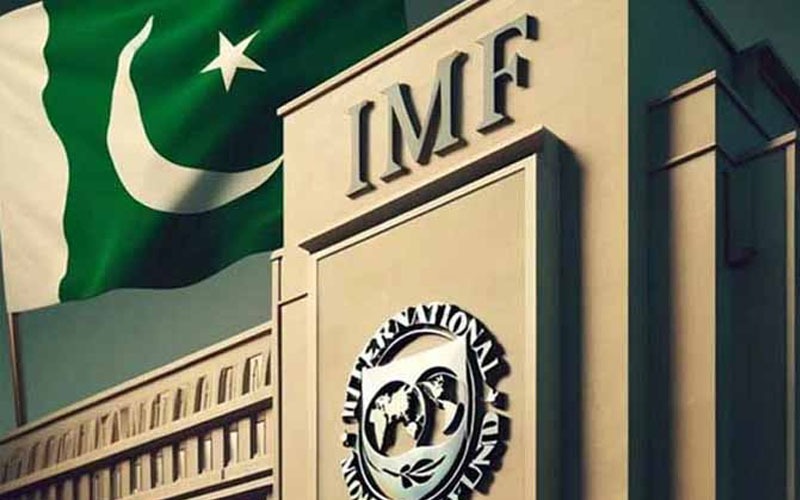
Pakistan has received $1.32 billion from the International Monetary Fund (IMF) following the completion of the third review under its Extended Fund Facility (EFF), the State Bank of Pakistan (SBP) confirmed on Wednesday.
According to the central bank, the disbursement includes about $1.1 billion under the EFF programme and nearly $220 million under the Resilience and Sustainability Facility (RSF). In total, Pakistan received 914 million Special Drawing Rights (SDRs), equivalent to approximately $1.32 billion.
The SBP said the funds will be reflected in Pakistan’s foreign exchange reserves for the week ending May 15, 2026.
What Is the IMF Programme?
Pakistan’s 37-month EFF arrangement was approved in September 2024. The programme aims to stabilize the economy, rebuild foreign exchange reserves, and support sustainable economic growth.
Under the IMF framework, Pakistan is required to implement key structural reforms, including broadening the tax base, improving fiscal discipline, and advancing the privatisation of state-owned enterprises.
The programme also focuses on strengthening the energy sector, improving public services, and increasing spending on health, education, and social protection to reduce the impact of reforms on vulnerable groups.
IMF Chief Warns Global Economy ‘Tested’ by Middle East Conflict
Government Calls It a Vote of Confidence
The government of Pakistan has described the IMF’s approval as a sign of confidence in its economic policies and reform agenda. Deputy Prime Minister and Foreign Minister Ishaq Dar stated that the release of the tranche reflects the IMF’s trust in Pakistan’s ongoing policy measures.
Economists say the inflow will provide short-term relief by boosting foreign exchange reserves, helping stabilize the local currency, and easing pressure on external payments.
#SBP has received about US$1.3 billion under the IMF’s EFF and RSF programs
The IMF Executive Board completed third review under the Extended Fund Facility (EFF) in its meeting held on 08 May 2026, and approved disbursement of SDR 760 million for Pakistan. Furthermore, the IMF…
— SBP (@StateBank_Pak) May 13, 2026
Climate Financing Under RSF Facility
Out of the total package, around $220 million has been provided under the IMF’s Resilience and Sustainability Facility (RSF). This financing is aimed at helping countries deal with climate-related risks and natural disasters.
The RSF supports reforms such as improved disaster preparedness, better water resource management, enhanced climate risk reporting, stronger coordination between federal and provincial governments, and better integration of climate risks into public investment planning.
Broader Economic Context
Pakistan continues to face economic challenges including high inflation, external debt pressure, and limited foreign reserves. In this context, IMF support plays a crucial role in stabilizing the macroeconomic situation.
However, analysts caution that while IMF inflows provide temporary relief, long-term stability will depend on sustained reforms—particularly in taxation, exports, energy sector efficiency, and investment growth.