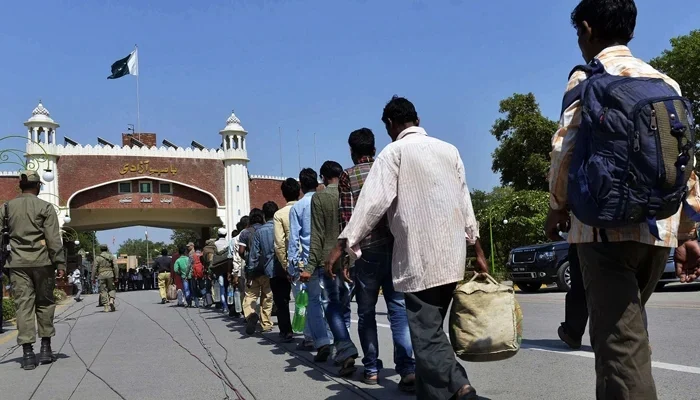
Pakistan and India on Wednesday exchanged updated lists of prisoners held in each other’s custody as part of the 2008 Consular Access Agreement, a confidence-building measure that requires both countries to share such information twice every year.
The exchange was carried out through diplomatic channels, with each country providing details of civilian detainees and fishermen currently imprisoned across the border.
Pakistan Shares List of 250 Indian Prisoners
According to Pakistan’s Foreign Office, Islamabad handed over a list of 250 Indian nationals held in Pakistan to the Indian High Commission in Islamabad.
The list includes 52 civilian prisoners and 198 fishermen, many of whom were detained after allegedly crossing maritime boundaries in the Arabian Sea.
At the same time, India provided Pakistan with a list of 439 Pakistani or believed-to-be Pakistani prisoners currently held in Indian prisons. The list includes 386 civilian prisoners and 53 fishermen, according to the Foreign Office.
Pakistan Calls for Early Repatriation
The Foreign Office urged India to release and repatriate 97 Pakistani prisoners—including 64 civilian detainees and 33 fishermen—who have completed their sentences and whose Pakistani nationality has already been verified.
Pakistan also called on India to ensure the safety, security, and well-being of all Pakistani and believed-to-be Pakistani prisoners awaiting release.
In addition, Islamabad requested that India provide prompt consular access to prisoners whose nationality has yet to be confirmed, saying the process would help facilitate their identification and eventual repatriation.
The Foreign Office reiterated that the Government of Pakistan would continue pursuing the early return of all Pakistani citizens held in Indian custody.
A Regular Confidence-Building Measure
The exchange of prisoner lists takes place on January 1 and July 1 every year under the Agreement on Consular Access, signed by Pakistan and India in 2008. The agreement aims to improve transparency regarding individuals detained in each other’s prisons and to facilitate consular access and humanitarian cooperation.
Separately, the two countries also exchange lists of their nuclear installations and facilities on the first day of every calendar year under a separate bilateral agreement that prohibits attacks on each other’s nuclear sites.
Earlier this year, on January 1, 2026, Pakistan provided India with a list of 257 Indian prisoners, comprising 58 civilian detainees and 199 fishermen held in Pakistani custody.
The regular exchange of prisoner information remains one of the few institutional mechanisms that continues to function between Pakistan and India despite longstanding political and diplomatic tensions. Humanitarian organizations have repeatedly encouraged both countries to expedite the release and repatriation of prisoners—particularly fishermen and civilians who have completed their sentences—to help reduce the human impact of bilateral disputes.