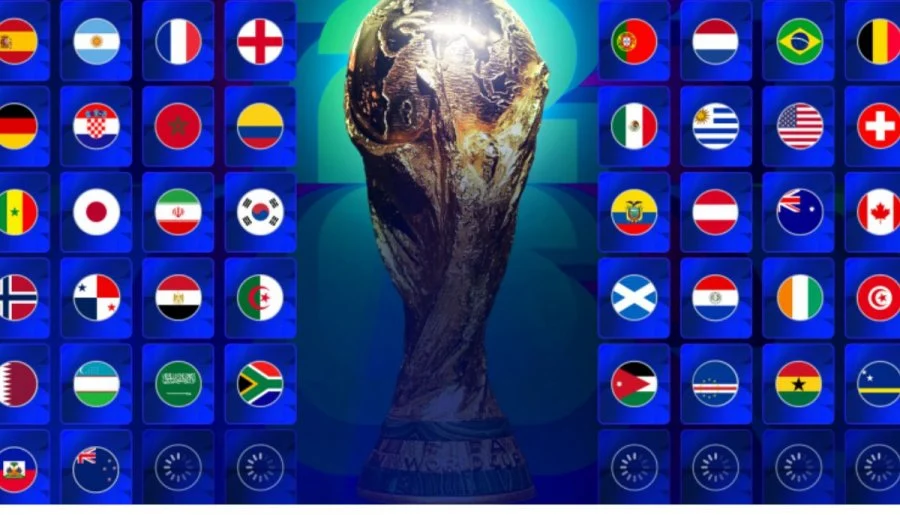
With the FIFA World Cup 2026 set to begin on June 11, football analysts and betting markets are already identifying the strongest contenders for the title in what will be the largest edition of the tournament in history.
A Historic World Cup with 48 Teams
The 2026 FIFA World Cup will be jointly hosted by the United States, Canada, and Mexico, featuring a record-breaking 48 national teams. A total of 104 matches will be played, making it the biggest tournament ever organized in the competition’s history.
The expanded format introduces 12 groups of four teams each, with the top two teams from every group automatically advancing to the knockout stage. In addition, the eight best third-placed teams will also move forward, resulting in a 32-team knockout round.
Top Favorites According to Experts and Odds
Early predictions suggest that European powerhouses Spain and France are among the leading favorites to win the trophy.
Both teams are currently listed with similar odds of around +475, reflecting their consistent performances in recent international tournaments.
- France reached the final of the 2022 World Cup and has continued strong form, including success in the 2024–25 UEFA Nations League.
- Spain enters the tournament with confidence after winning Euro 2024, defeating several top-ranked European sides along the way.
Other major contenders include:
- England (+650)
- Brazil (+850)
- Argentina (+900)
These teams remain strong due to their squad depth, experience, and history in international competitions.
Historical Giants of the Tournament
When looking at World Cup history, Brazil remains the most successful nation, having won the title five times. Germany and Italy follow closely with four titles each.
However, despite its dominant legacy, Brazil has not reached a World Cup final since 2002, marking more than two decades without appearing in the tournament’s final match.
This long gap has raised questions about whether Brazil can reclaim its former dominance on the global stage.
Iran Seeks FIFA Help for US World Cup Visas Amid Political Tensions
Who Really Has the Edge?
Statistical trends suggest that World Cup winners traditionally come from either Europe or South America. In fact, no team outside these two regions has ever won the tournament in its nearly 100-year history.
Based on historical performance, analysts often narrow down serious contenders to a smaller group of elite teams, including:
- Argentina
- France
- Germany
- Netherlands
- Spain
These nations consistently perform well in major tournaments and have strong squads capable of handling high-pressure knockout matches.
What Makes 2026 Different?
The expanded 48-team format adds a new layer of unpredictability. More teams mean more opportunities for upsets, surprise qualifiers, and breakthrough performances from emerging football nations.
While traditional powerhouses still dominate predictions, the larger structure of the tournament could open the door for unexpected outcomes once the knockout stage begins.
The tournament officially kicks off on June 11 in Mexico City, marking the beginning of a month-long global football spectacle leading up to the final on July 19.