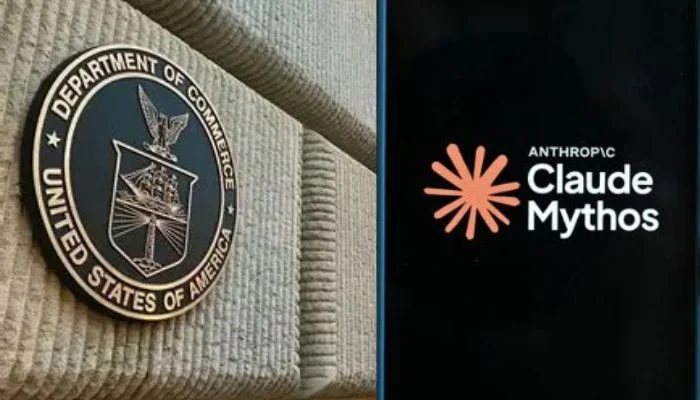
The administration of US President Donald Trump has granted AI company Anthropic permission to redeploy its advanced cybersecurity model, Mythos 5, to a limited group of trusted organisations in the United States.
The decision marks a significant development in the ongoing dispute between the US government and Anthropic over the deployment of the company’s most advanced artificial intelligence models.
Commerce Department Partially Lifts Restrictions
According to Anthropic, the company was formally notified by the US government that Mythos 5 can once again be made available to selected organisations responsible for protecting critical infrastructure.
The announcement follows restrictions imposed last month, when the US Department of Commerce directed Anthropic to disable access to both the Mythos 5 and Fable 5 AI models over national security concerns.
In a letter addressed to Anthropic co-founder Tom Brown, US Commerce Secretary Howard Lutnick stated that the government had determined appropriate safeguards were now in place to allow certain trusted partners to access the Mythos 5 model.
However, the letter did not indicate that similar approval had been granted for Anthropic’s Fable 5 model, suggesting that restrictions on that system remain in effect.
Anthropic Welcomes the Decision
Following the government’s notification, Anthropic confirmed the development in a statement shared on social media.
The company said Mythos 5—described as its most powerful cybersecurity-focused AI model—would be restored for a select group of US organisations that operate and defend critical infrastructure.
Anthropic welcomed the decision, describing it as an important step toward enabling trusted institutions to use advanced AI tools for cybersecurity and defensive purposes.
Background to the Dispute
The latest announcement comes after weeks of disagreements between Anthropic and the US government over access to advanced AI technology.
The dispute began when federal authorities imposed restrictions on some of the company’s latest AI systems, citing concerns about national security and the potential risks associated with highly capable artificial intelligence models.
The disagreement evolved into a broader legal and regulatory battle over how advanced AI should be governed and who should be permitted to use such technologies.
Legal Challenge Against Government Restrictions
Anthropic has also been involved in legal proceedings related to restrictions affecting government use of its AI systems.
The company challenged a directive that limited access to its AI tools within certain US government agencies after the Department of Defense reportedly identified Anthropic as a potential supply chain risk.
According to the report, Defense Secretary Pete Hegseth had raised concerns about the company during the review process.
Anthropic subsequently sought judicial relief, and a US court reportedly set aside the Pentagon’s directive, allowing the legal dispute to continue through other regulatory channels.
Anthropic Secures Mega AI Chip Deal with Google and Broadcom
Focus on Critical Infrastructure
The government’s latest decision limits deployment of Mythos 5 to organisations involved in operating and protecting critical infrastructure, such as energy systems, communications networks, transportation, financial services, and other essential sectors.
Officials indicated that access would be restricted to trusted partners operating under enhanced safeguards designed to minimise security risks while allowing defensive cybersecurity capabilities to benefit from advanced AI technologies.
AI Regulation Continues to Evolve
The partial restoration of Mythos 5 reflects the growing challenge governments face in balancing innovation with national security.
As artificial intelligence becomes increasingly capable, regulators are working to establish policies that encourage technological development while preventing misuse of powerful AI systems.
Although Anthropic has secured permission to redeploy Mythos 5 to a limited group of organisations, uncertainty remains regarding the future availability of Fable 5 and the broader regulatory framework governing advanced AI models in the United States.
The latest development suggests that discussions between the US government and AI companies are likely to continue as policymakers seek to define the appropriate safeguards for deploying increasingly sophisticated artificial intelligence technologies.