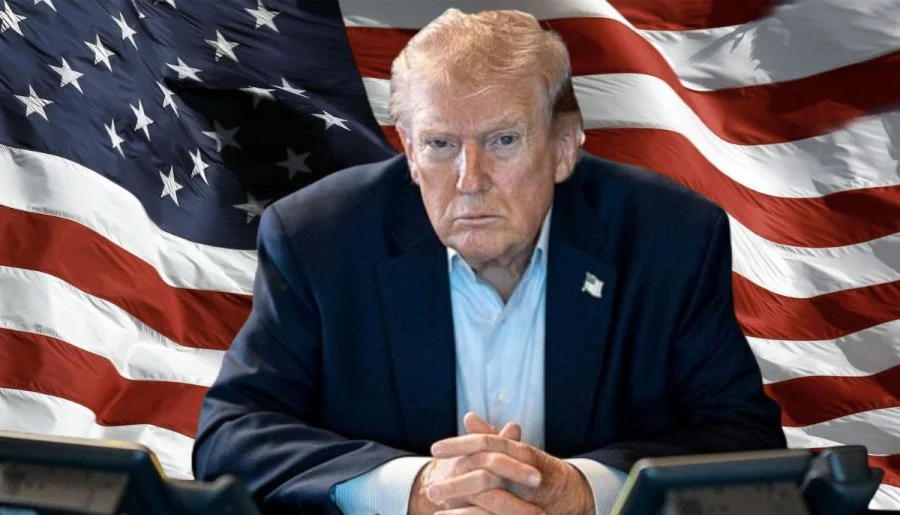
US President Donald Trump announced that Abu Bilal al-Minuki, described as the second-in-command of ISIS globally, was killed during a joint military operation carried out by American and Nigerian forces on May 15, 2026.
In a statement posted on Truth Social, Trump said the mission was conducted under his direction and described it as a “meticulously planned and very complex operation.” He claimed the target had been one of the world’s most active terrorists and accused him of helping coordinate attacks in Africa and beyond.
Who was Abu Bilal al-Minuki?
According to the US State Department, Abu Bilal al-Minuki was a Nigerian national linked to ISIS operations in Africa’s Sahel region. In 2023, American authorities identified him as a senior ISIS leader involved in operational planning and international funding networks.
He reportedly worked within ISIS’s “General Directorate of Provinces,” an organizational structure responsible for overseeing and coordinating the group’s regional branches around the world.
US authorities also placed him on the global terrorist sanctions list in 2023 through the Treasury Department’s Office of Foreign Assets Control (OFAC).
Publicly available records state that al-Minuki was born in 1982 in Borno State, northeastern Nigeria — a region that has long been affected by extremist violence and insurgent activity due to its proximity to Chad, Cameroon, and Niger.
ISIS activity in Africa and the Sahel
Although ISIS lost much of its territory in Iraq and Syria after 2017, the organization has continued operating through regional affiliates in parts of Africa and the Middle East.
Security experts say extremist groups linked to ISIS have expanded their influence in the Sahel region in recent years, taking advantage of weak governance, poverty, political instability, and porous borders.
Countries including Nigeria, Niger, Mali, Burkina Faso, and Chad have faced repeated attacks from militant groups associated with ISIS and other extremist organizations.
Iran Accuses UAE of Being “Active Partner” in US-Israeli War
Joint US-Nigerian military cooperation
The operation also highlights growing military cooperation between the United States and Nigeria in counterterrorism efforts. Nigerian forces have for years been engaged in operations against militant groups operating in the country’s northeast.
President Trump noted that this was not the first operation targeting ISIS elements in the region. He referred to earlier US-directed strikes in Nigeria that reportedly killed multiple militants during operations conducted last year.
Strategic significance of the operation
Analysts believe the killing of a senior ISIS figure could temporarily disrupt the group’s operational planning and financial coordination in Africa. However, experts also warn that extremist organizations often attempt to reorganize quickly after losing senior leaders.
Counterterrorism specialists say long-term stability in the Sahel region will depend not only on military operations but also on stronger governance, economic development, border security, and regional cooperation.
Conflict in the Sahel remains a global concern
The Sahel region has increasingly become one of the world’s major security hotspots. International organizations have repeatedly warned that extremist violence, displacement, and humanitarian crises continue to threaten millions of people across the region.
The latest operation underscores how global powers and regional governments remain focused on preventing ISIS and affiliated groups from rebuilding large-scale operational networks in Africa.